
Stackable Steel Logistic Container
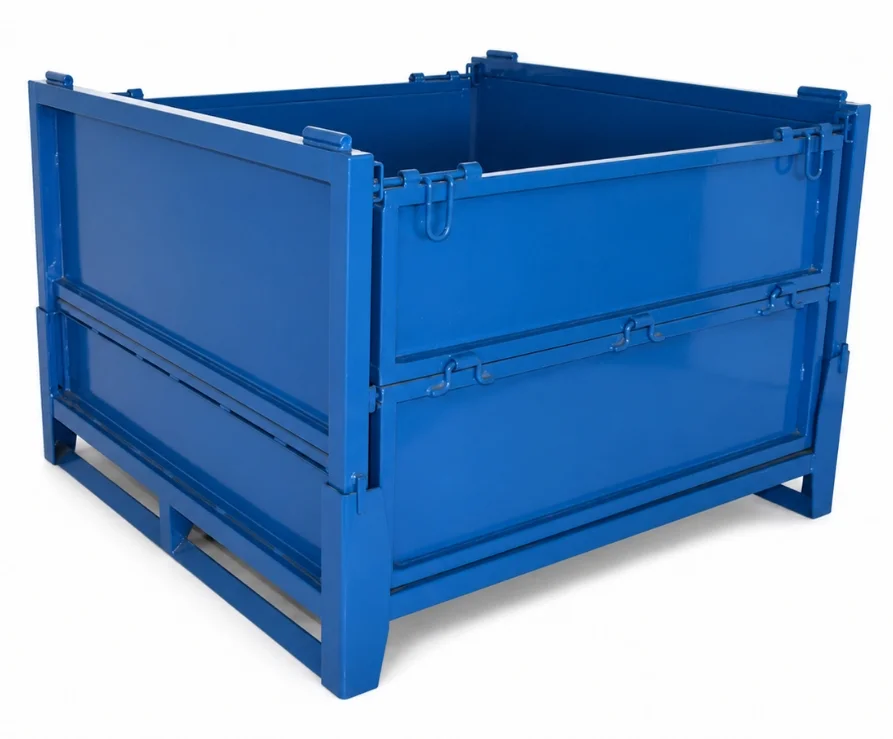
A heavy-duty steel logistic container designed for industrial storage, transport and material handling. Its stackable structure, forklift-accessible base and drop-down panels simplify loading and unloading while improving warehouse space utilization. Durable construction and customizable configurations make it suitable for demanding logistics and manufacturing environments.
Specifications
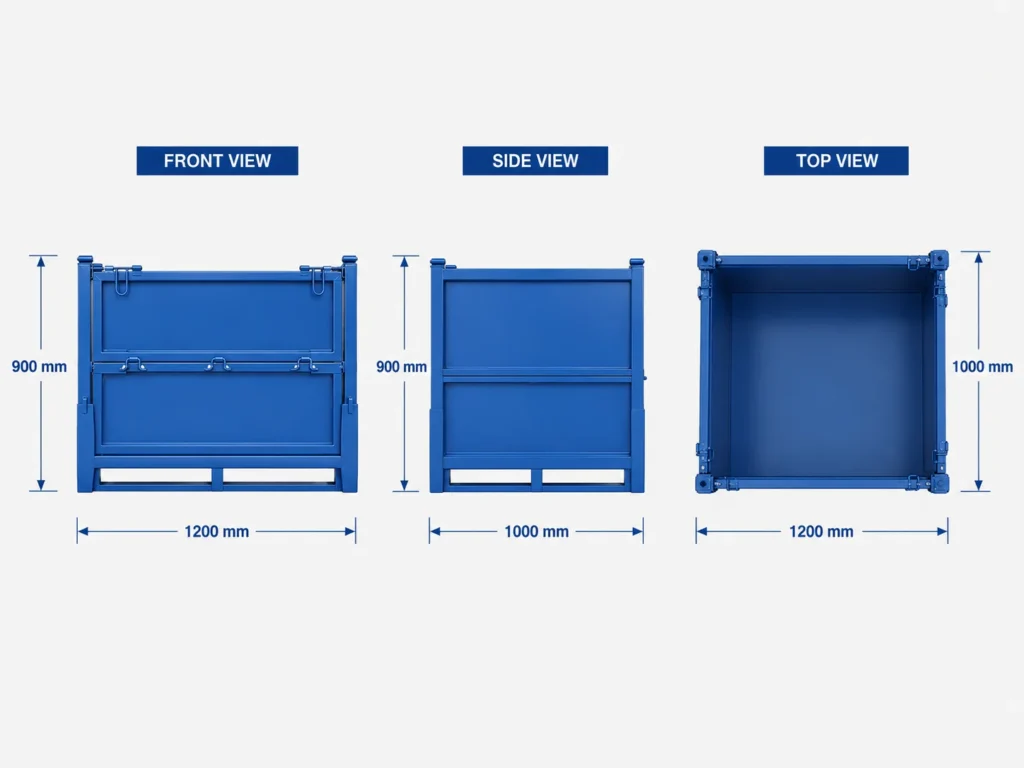
Product Name
Material
Weight
Surface Treatment
Application Industry
Features
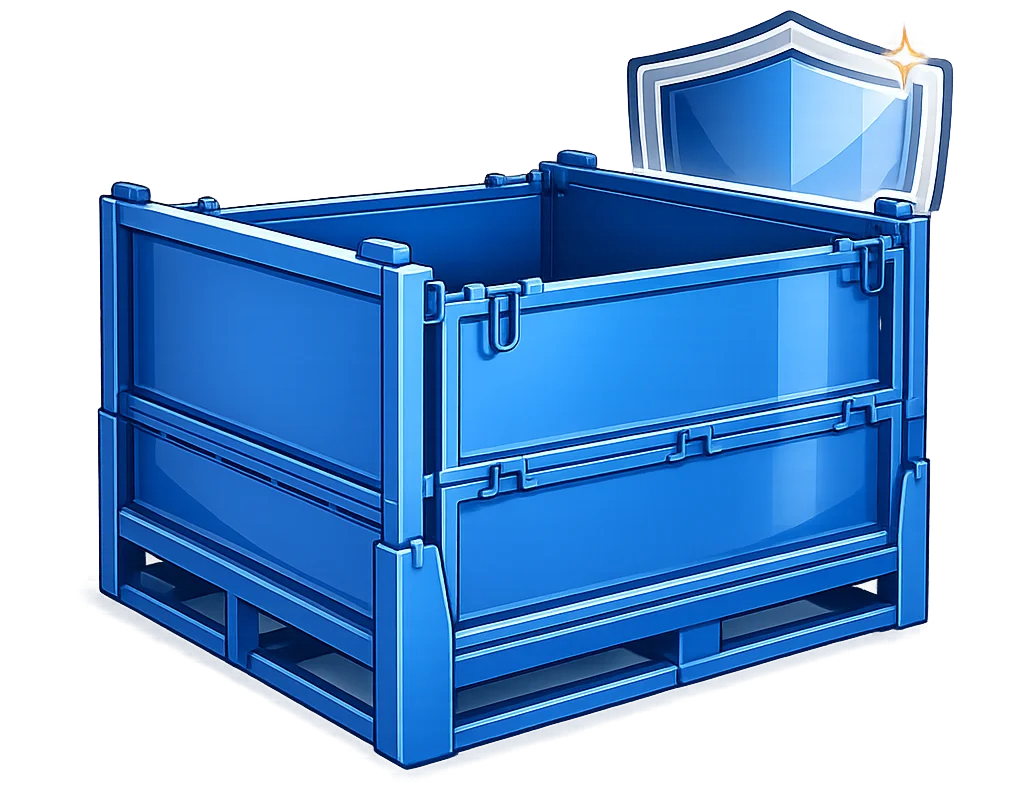
Built from strong steel for long-lasting industrial use.
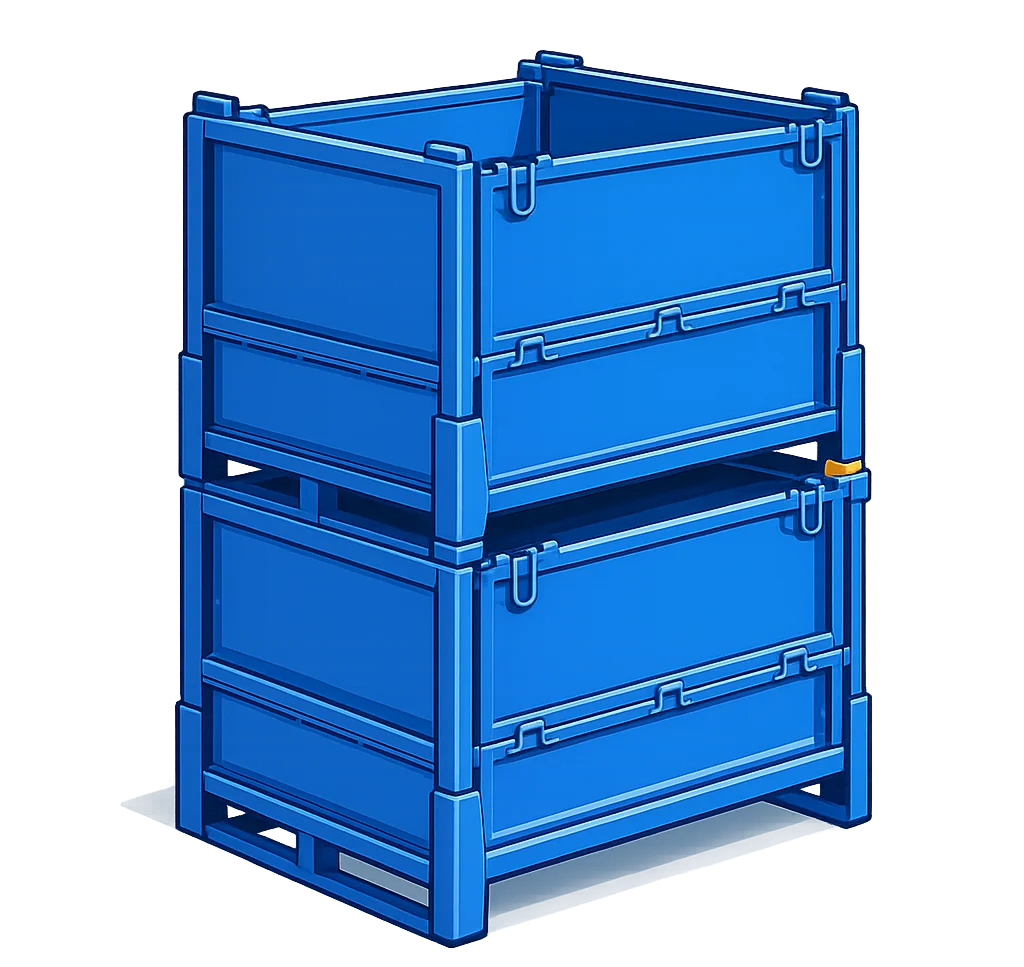
Stackable design helps improve warehouse storage efficiency.
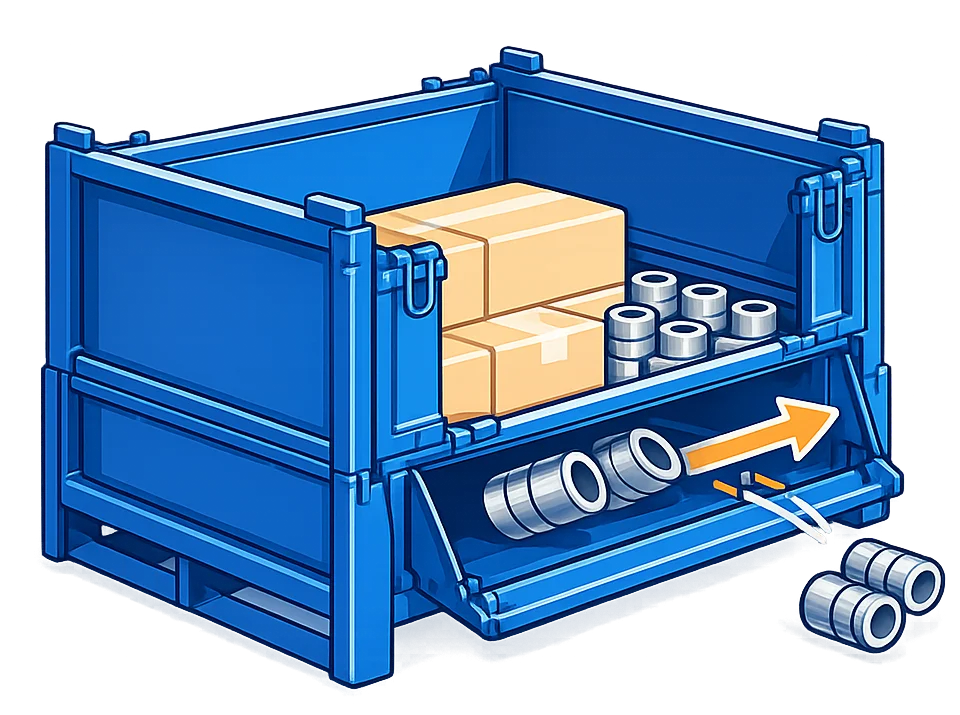
Drop-down panel allows easier loading and unloading.
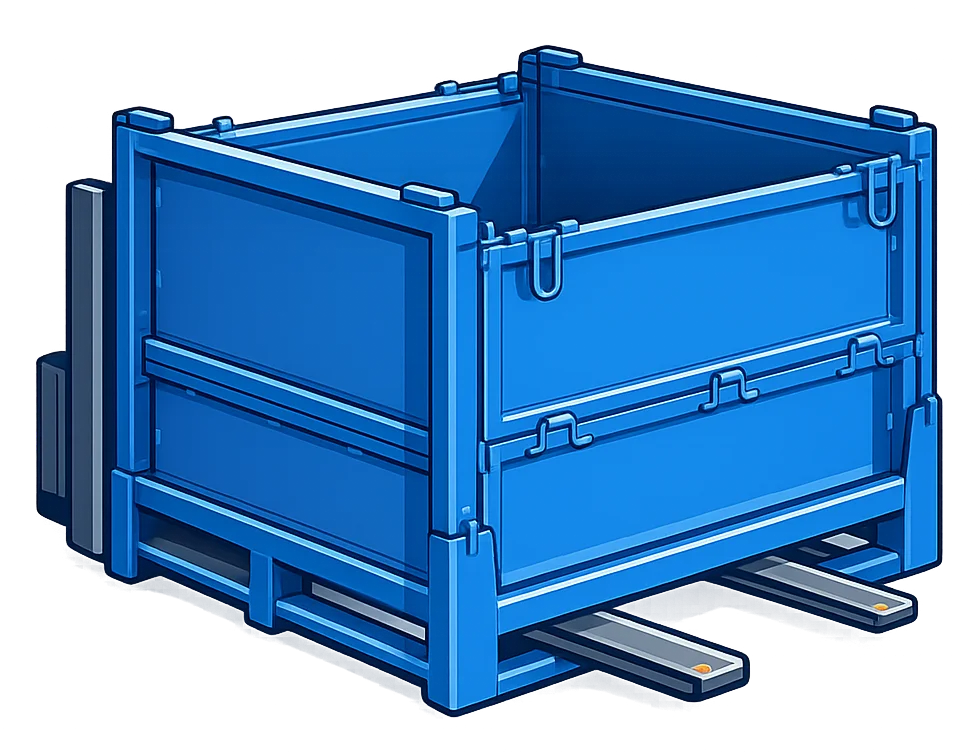
Forklift-accessible base supports smooth internal transport.
Structural Details
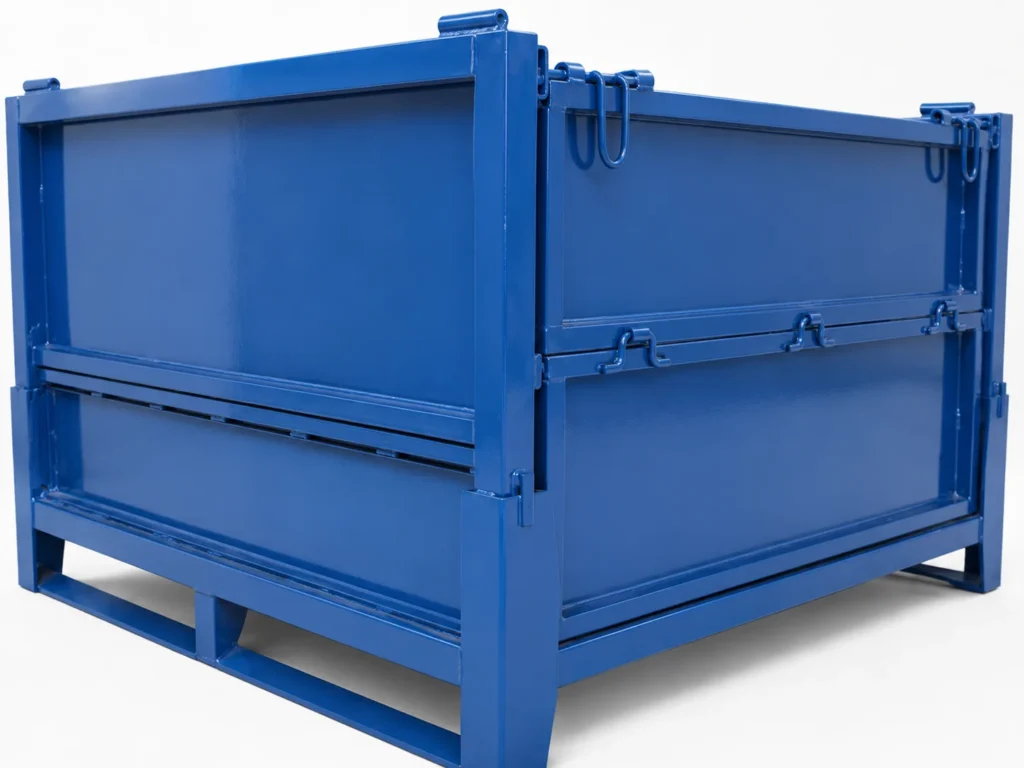
Reinforced Steel Frame
Built with a reinforced steel frame, the container provides excellent structural strength for demanding storage and handling tasks. The robust construction helps ensure long-term durability and reliable performance in industrial environments.
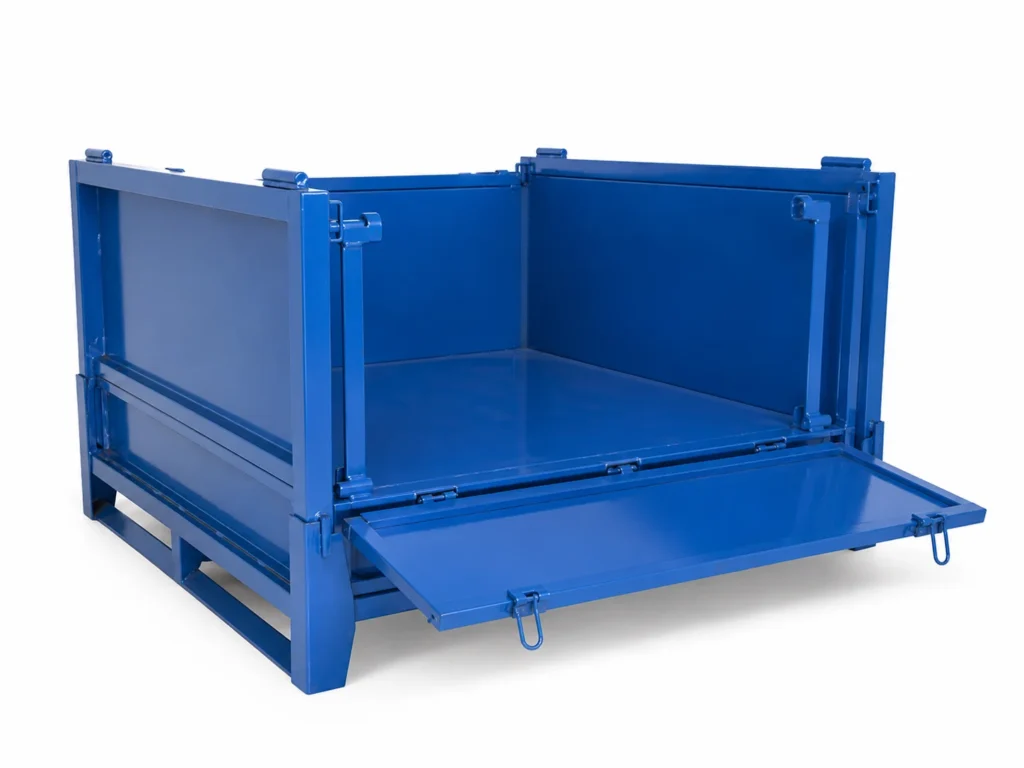
Drop-Down Front Panel
The drop-down front panel allows easier access to stored items without removing goods from the top. This user-friendly design improves loading, unloading and picking efficiency in daily warehouse operations.
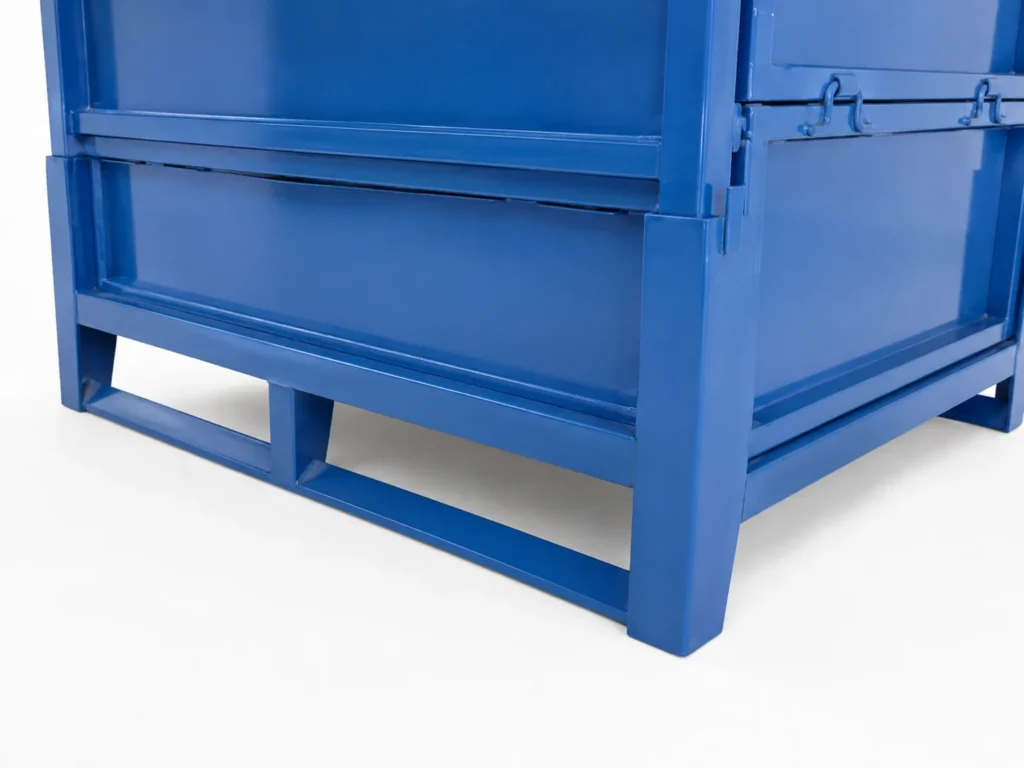
Forklift-Accessible Base
The container features a forklift-accessible base for smooth lifting and transport. This design supports efficient movement between storage areas, production lines and internal logistics workflows.
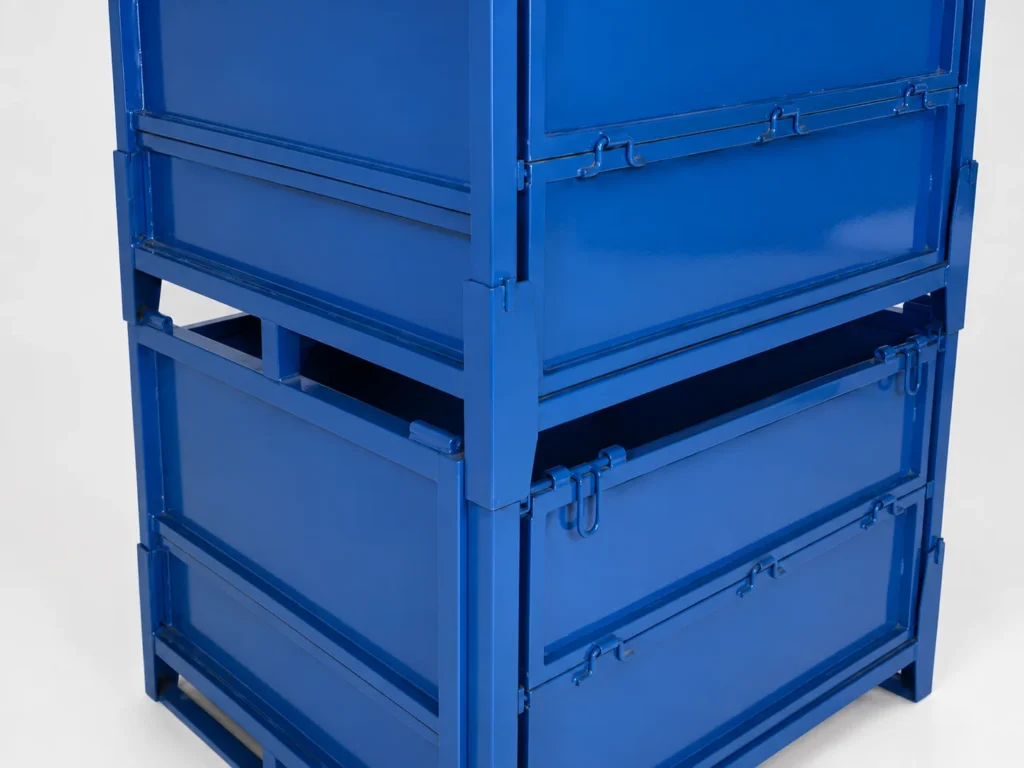
Stackable Corner Design
Its stackable corner structure is designed to support secure vertical stacking, helping maximize warehouse space and improve storage organization. It is ideal for facilities requiring efficient space utilization.
TITAN – Your Reliable Logistic Equipment Manufacturer in China
Logistic containers are heavy-duty storage and transport solutions designed to protect and organize materials in a wide range of industrial and commercial applications. They are essential for improving warehouse efficiency and internal logistics because they provide a durable, reusable and easy-to-handle solution for parts storage, product transport and material flow management.
TITAN logistic containers are built to support demanding operations with strong steel construction, stackable design and forklift-friendly handling. Our containers can also be equipped with practical features such as drop-down panels and customized dimensions to improve accessibility and adapt to different storage and transport needs. We provide flexible customization solutions for various industries, helping customers achieve safer, more efficient and more organized logistics operations.
Applications
Warehousing & Distribution
Store, organize and move bulk goods efficiently while improving warehouse space utilization through stackable storage.
Manufacturing & Parts
Ideal for storing and transferring metal parts, components and work-in-process materials between production areas.
Automotive & Industrial
A durable solution for handling heavy automotive parts, castings, assemblies and other industrial components.
Internal Logistics
Designed for efficient material flow between warehouses, production lines, assembly areas and distribution points.
Related Products
Stackable Steel Logistic Container: The Complete FAQ Guide
What is a stackable steel logistics container?
A stackable steel logistics bin is a reusable container used for industrial warehousing, transportation, and material handling. It typically features a reinforced steel structure, solid side panels, a forklift-accessible base, and stackable corner posts, making it suitable for use in factories, warehouses, distribution centers, and internal corporate logistics operations.
In what scenarios are steel logistics bins primarily used?
Steel logistics bins are commonly used for the storage and transfer of metal parts, castings, machined parts, automotive components, assemblies, tools, and other industrial materials. They help businesses improve material sorting, warehouse organization, and on-site logistics efficiency, while reducing disorganization associated with bulk materials during handling.
Which industries are suitable for using stackable steel logistics bins?
These products are widely used in mechanical manufacturing, the automotive industry, metal processing, warehousing and distribution, engineering equipment, parts supply chains, and other industrial logistics scenarios. Steel logistics bins are typically more practical for companies that need to frequently handle heavy, irregularly shaped, or high-value parts.
Can steel logistics bins be stacked?
Yes. Stackable steel logistics bins are typically designed for vertical stacking using reinforced corner posts or specialized stacking positioning structures. Proper stacking maximizes the use of vertical warehouse space, reduces floor space occupancy, and improves the tidiness and space utilization of storage areas.
Can steel logistics bins be handled with a forklift?
Yes. The bottom of the product usually features a designated space for forklift access, allowing forklifts to lift and move the containers from a specific direction. This design is suitable for high-frequency transfers between warehouses, production lines, loading/unloading areas, and within-plant logistics.
What are the advantages of a flip-down front panel?
The flip-down front panel provides operators with a more convenient side access channel for retrieving and placing items without having to reach into the top of the bin. For storing heavier, larger, or deeper-stacked parts, this design helps improve efficiency in loading, unloading, picking, and daily operations.
What materials are typically used for this logistics bin?
These logistics bins are typically manufactured from steel to ensure high structural strength, stability, and durability. Specific steel grades, sheet thicknesses, and structural reinforcement methods can be adjusted based on load-bearing requirements, component types, and actual operating conditions.
What surface treatments are available for steel logistics bins?
Powder coating is a common surface treatment that provides an attractive appearance, wear resistance, and basic protective properties. Colors and surface treatment options can also be customized based on the operating environment, color management, or corrosion protection requirements.
Can the dimensions of steel logistics bins be customized?
Yes. TITAN can customize the length, width, height, and local structural features based on component dimensions, the number of items per container, warehouse space, forklift conditions, and logistics processes. For OEM and industrial projects, custom dimensions help reduce wasted space and improve loading efficiency.
Can the load capacity of steel logistics bins be customized?
Yes. Load capacity is closely related to bin dimensions, steel thickness, frame design, base structure, and stacking requirements. For custom projects, structural solutions can be designed based on the customer’s target load and actual operating conditions.
Are steel logistics bins suitable for storing heavy metal parts?
Yes. Their rigid steel construction makes them suitable for the storage and handling of castings, machined parts, housings, flanges, wheel hubs, and other heavy-duty industrial components. The final design should be tailored to the parts’ weight, shape, loading method, and handling frequency.
How do stackable logistics bins improve warehouse efficiency?
They improve warehouse efficiency through vertical stacking, standardized storage, and rapid forklift handling, while reducing the floor space occupied by loose materials. For companies with frequent production-to-warehouse transfers, standardized logistics bins also help optimize material flow and inventory management.
Can steel logistics bins be reused?
Yes. Steel logistics bins are typically designed for industrial reuse and are suitable for long-term, repeated circulation. Compared to single-use packaging, they are better suited for closed-loop logistics, on-site material handling, and component supply chains that require multiple cycles of reuse.
How should steel logistics bins be maintained?
Routine maintenance should focus on inspecting the frame, welds, hinges, latches, stacking points, and forklift sockets for deformation, looseness, or damage. Any visible damage to the surface coating should also be repaired promptly to maintain the product’s protective properties and ensure long-term usability.
How do you select the right steel logistics bin?
When selecting a model, first confirm the part dimensions, total load capacity, loading method, stacking requirements, forklift specifications, warehouse space, and operating environment. If standard products do not meet the requirements, it is generally more appropriate to customize them based on drawings, samples, or specific operating conditions.
What information is required to order a custom steel logistics bin?
We recommend providing the required external dimensions, maximum load capacity, types of materials to be stored, forklift handling methods, stacking requirements, operating environment, and estimated purchase quantity. Product drawings, on-site photos, part dimensions, or references to existing containers will also help determine the structural design more accurately.
What is the difference between steel logistics bins and wire mesh bins?
Steel logistics bins feature solid steel plate sides, providing better containment and protection for small, irregularly shaped, or heavy parts; wire mesh bins, on the other hand, offer better visibility and ventilation. The choice between the two should be based on the stored materials, handling methods, ventilation requirements, and protection needs.
What is the difference between steel logistics bins and plastic pallet boxes?
Steel logistics bins typically offer higher structural rigidity and are better suited for many heavy-duty and industrial handling scenarios; plastic pallet bins are lighter in weight and offer better corrosion resistance in certain environments. When selecting a model, factors such as load capacity, material type, handling frequency, service life, and environmental conditions should be considered comprehensively.
Are steel logistics bins suitable for storing irregularly shaped parts?
Yes. Steel logistics bins can be used to store castings, housings, brackets, machined parts, and assemblies that are difficult to accommodate in standard cardboard boxes or ordinary plastic bins. If parts need to be separated or protected from impact, internal dividers, padding, or specialized positioning structures can be incorporated into the design.
Can the color of steel logistics bins be customized?
Yes. Colors can be customized according to project requirements, corporate visual identity standards, or warehouse classification rules. Using different colors to distinguish material types, production stages, departments, or product categories also helps improve the efficiency of internal logistics identification.
Are the logistics bins compatible with existing forklifts and warehouse equipment?
Yes. During the customization phase, the bottom structure and overall dimensions can be tailored to match the dimensions of existing forklift forks, fork entry direction, warehouse aisles, rack space, and operational workflows. It is recommended to confirm relevant equipment parameters and on-site usage conditions before formal production begins.
Can steel logistics bins be used outdoors?
Yes, under certain conditions; however, suitability for long-term outdoor use depends on exposure time, humidity, temperature, rainfall, and corrosive environments. For outdoor or highly corrosive environments, appropriate materials and surface protection solutions should be selected based on actual operating conditions.
How do I determine the appropriate size for industrial logistics bins?
Dimensions should be determined comprehensively based on part geometry, the number of parts per bin, maximum load capacity, forklift operating space, warehouse layout, transportation restrictions, and stacking plans. Appropriate bin dimensions can minimize internal voids, improve loading efficiency per unit of space, and reduce wasted space during handling.
What should be checked before stacking loaded steel logistics bins?
Before stacking, verify that the container structure is intact, the load is evenly distributed, the stacking alignment points are correct, and the actual load is within the permissible range. Additionally, ensure the ground is stable and follow the approved stacking method to ensure safe storage.
How can I obtain a quote for custom steel logistics bins?
When requesting a quote, we recommend providing the target dimensions, load capacity, purchase quantity, types of products to be stored, stacking requirements, surface treatment methods, and any special structural requirements. Providing drawings, photos of parts, or reference products will help TITAN evaluate the project more accurately and develop a tailored solution.