
Laundry Roll Cage Split Gate
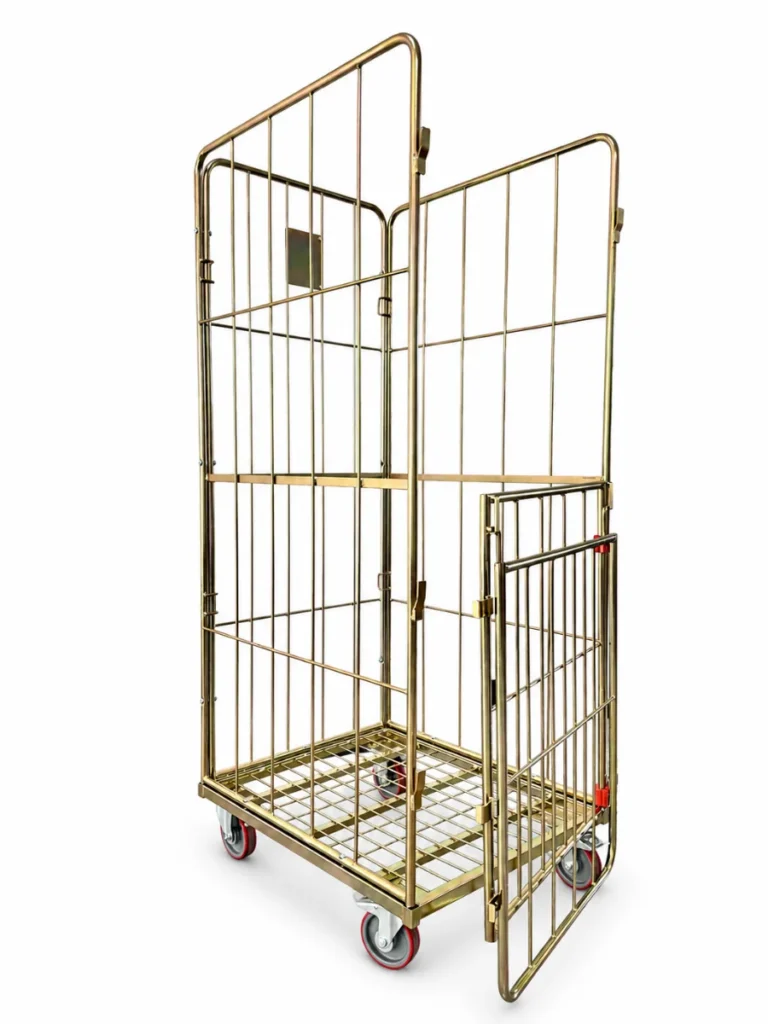
The Laundry Roll Cage Split Gate is designed for the safe and efficient transport of linen, uniforms, garments and other laundry items in busy collection and distribution environments. Featuring a durable wire mesh structure, smooth-rolling castors and a practical split gate design, it allows easier loading and unloading while helping keep contents secure during movement. Ideal for hotels, hospitals, commercial laundries and industrial laundry facilities, it improves handling efficiency, supports organized material flow and helps optimize daily laundry operations.
Specifications
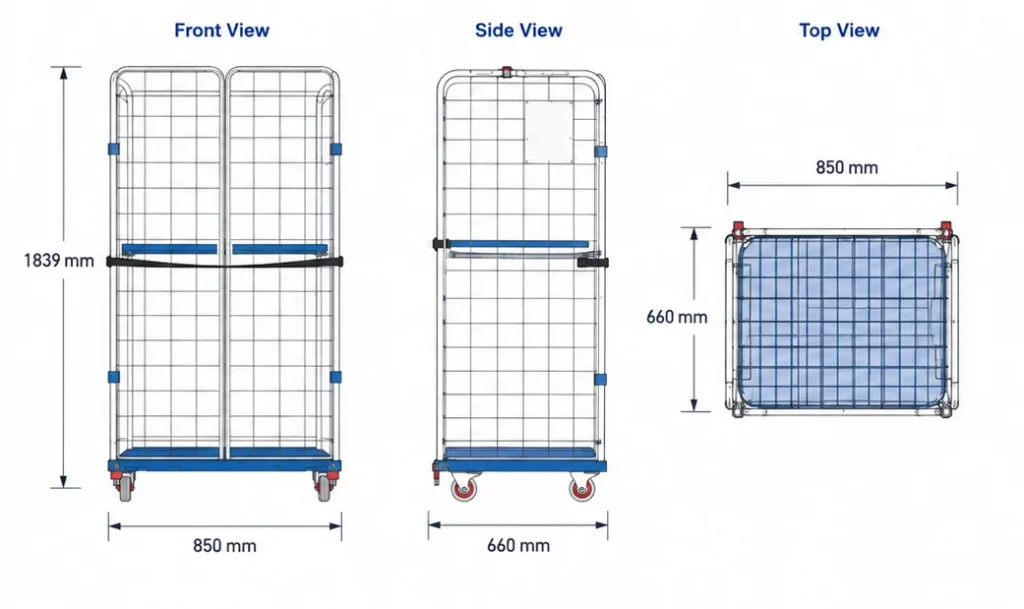
Product Name
Material
Surface Treatment
Application Industry
Features
Customization Options
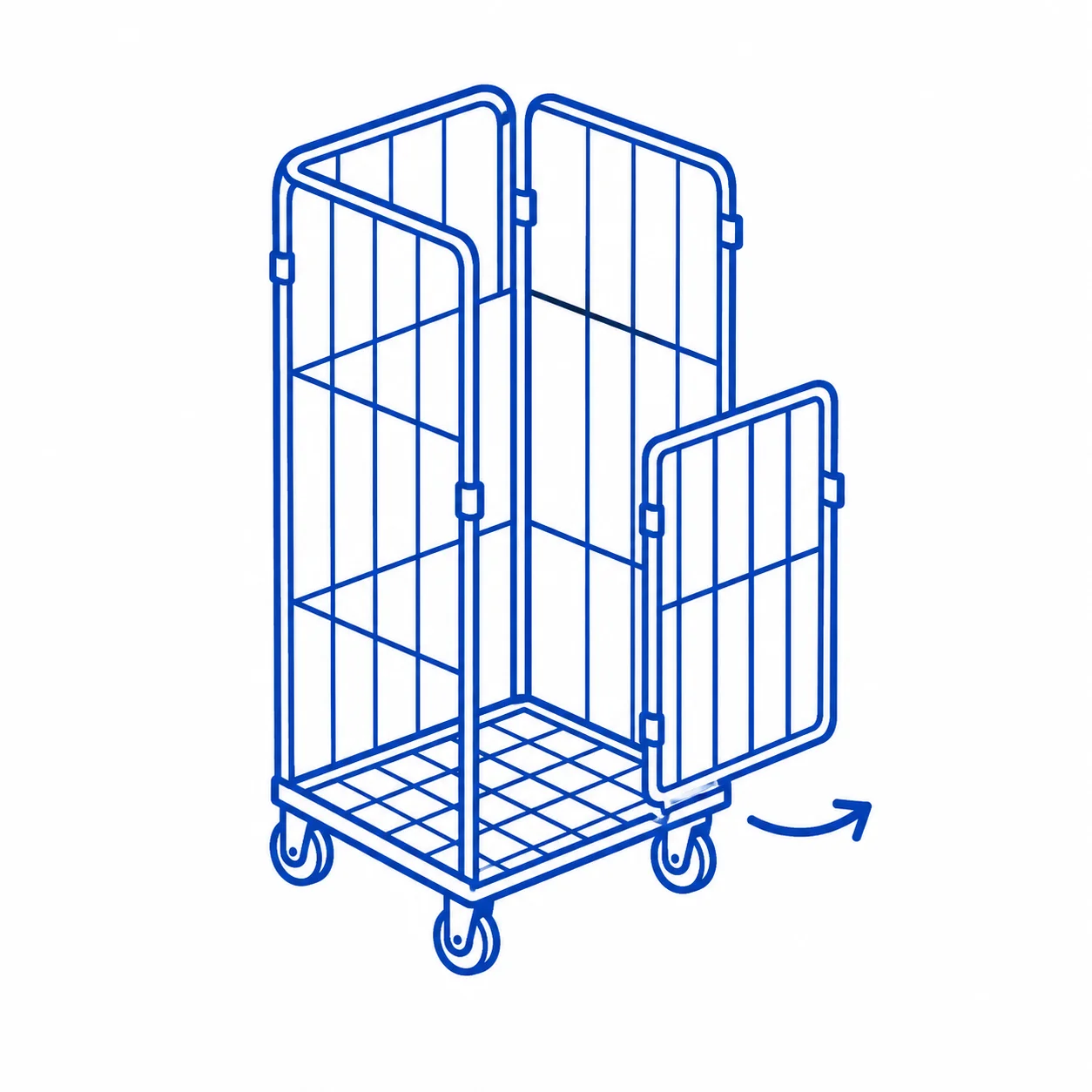
Split gate design allows faster loading and unloading without opening the entire front.
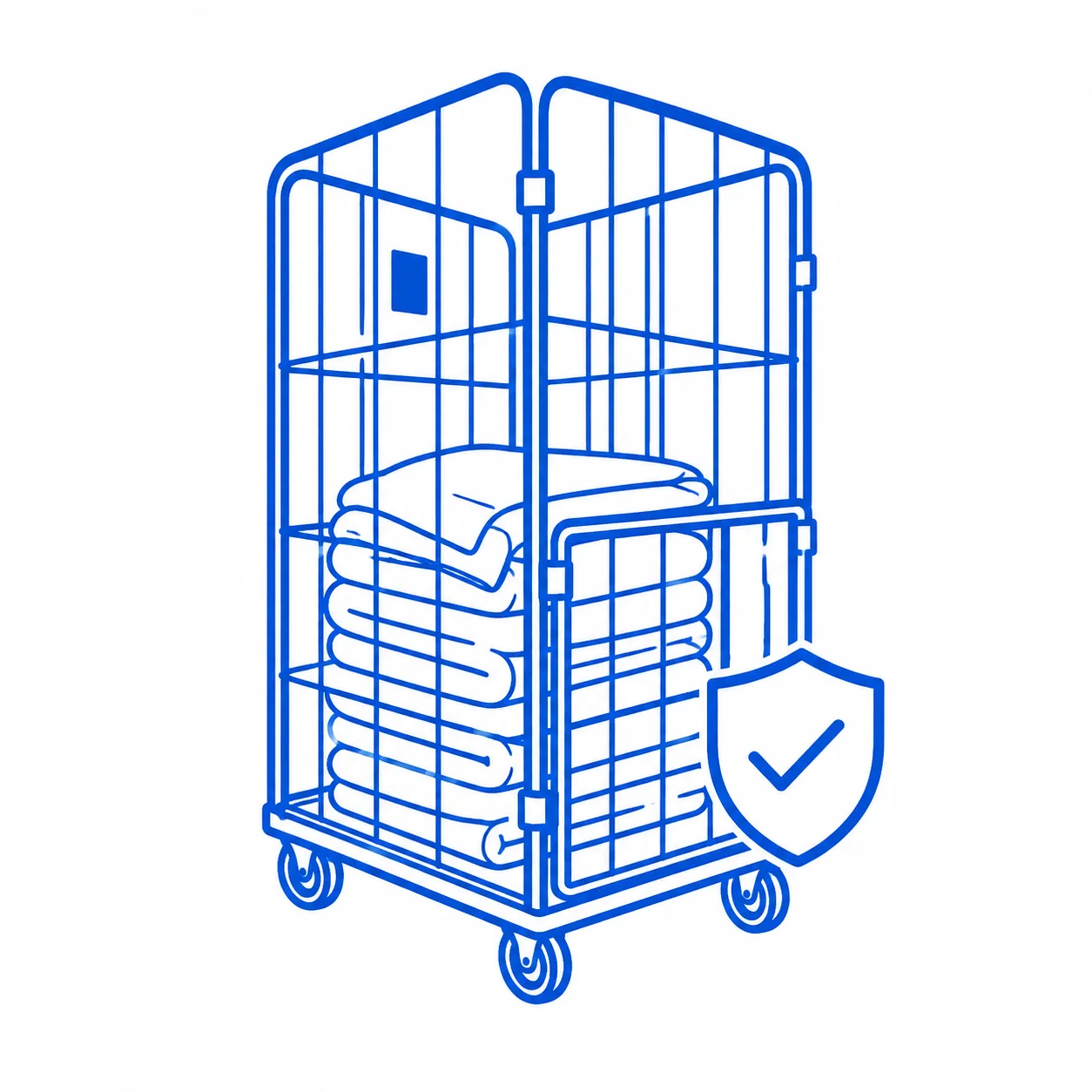
High-sided 4-wall enclosure helps prevent linen and garments from falling during movement.
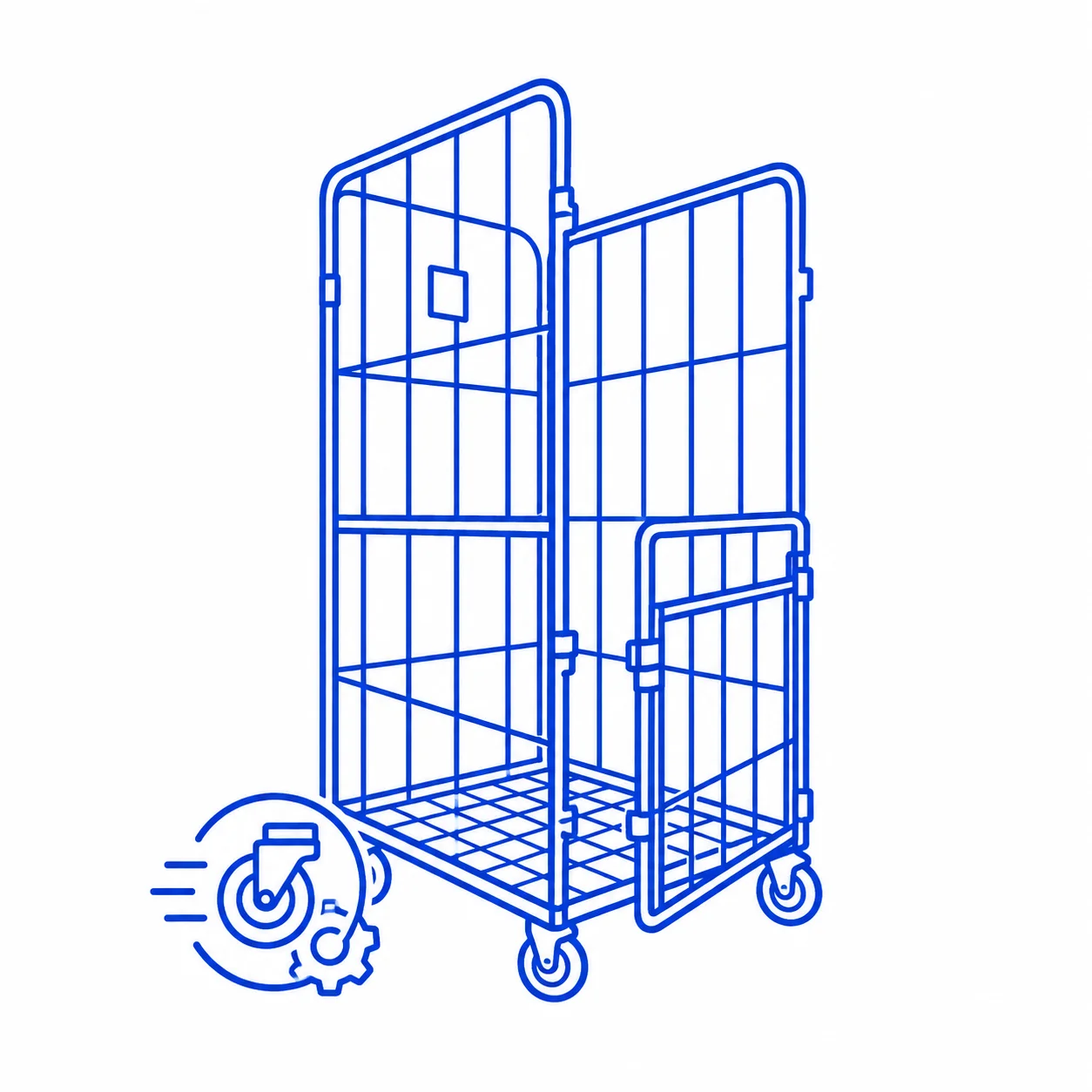
Smooth mobility and easy access reduce handling time in busy laundry operations.
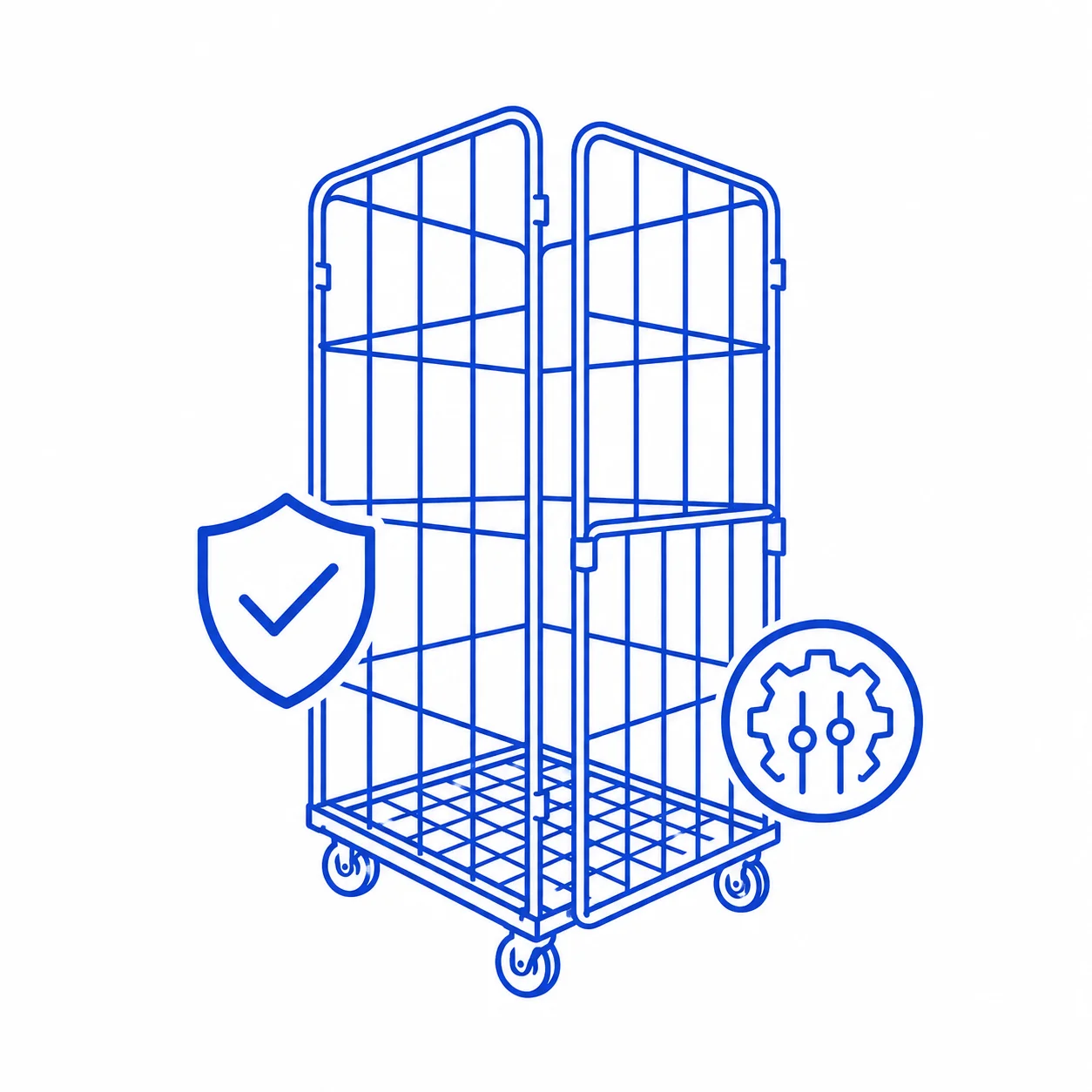
Robust steel construction supports frequent circulation in commercial and industrial laundry environments.
Structural Details
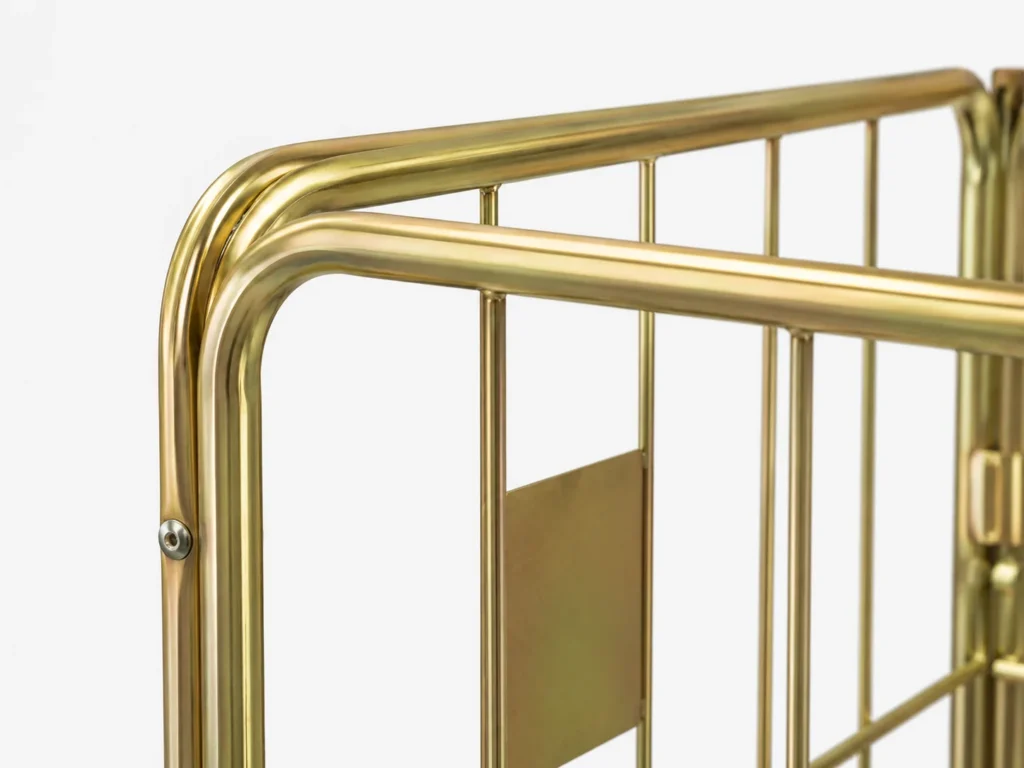
Reinforced Tubular Steel Frame
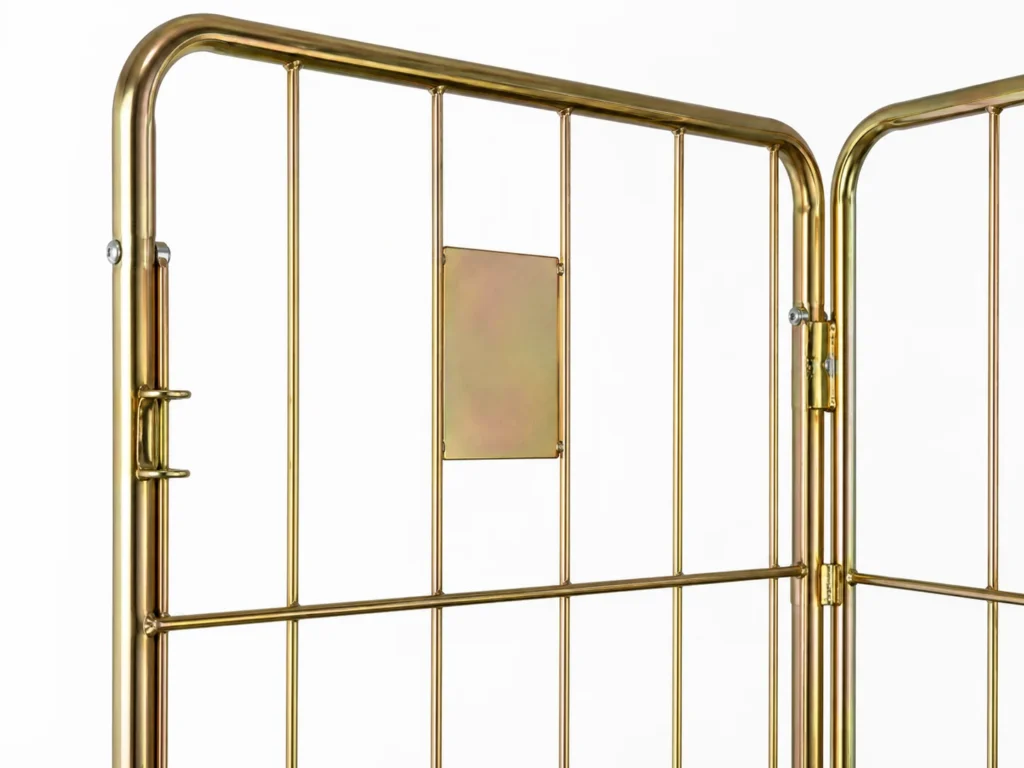
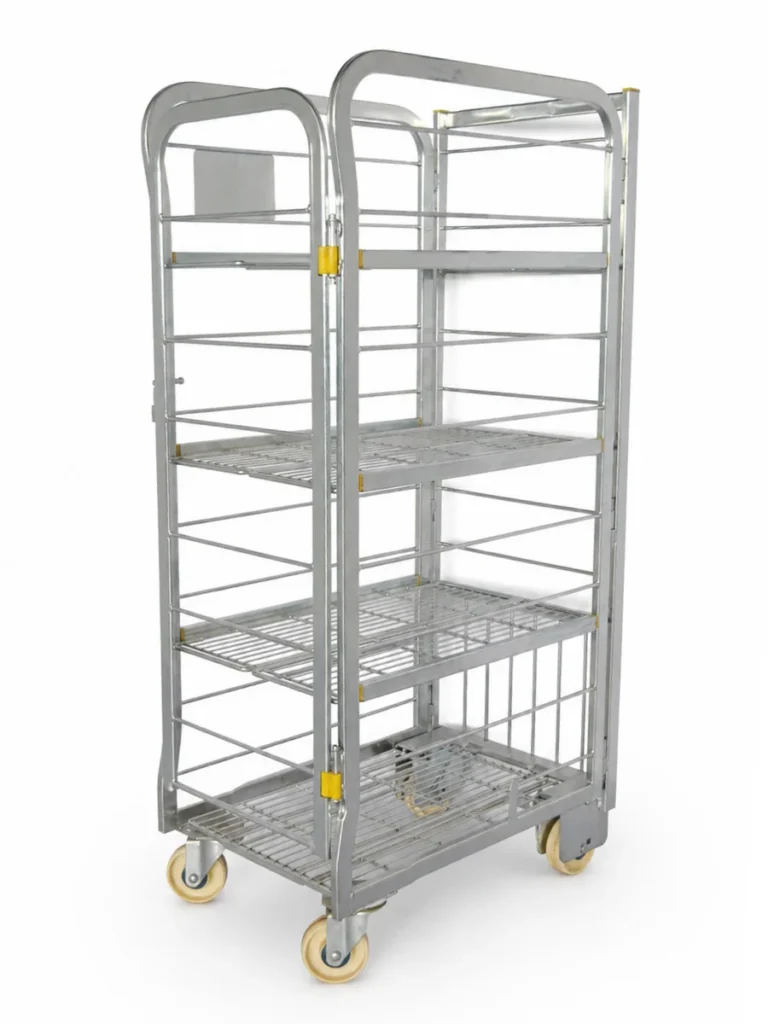
The main structure is built with reinforced tubular steel, forming a stable and durable frame for daily laundry handling. The rounded upper corners and welded joints help maintain overall rigidity while supporting repeated movement and long-term use.
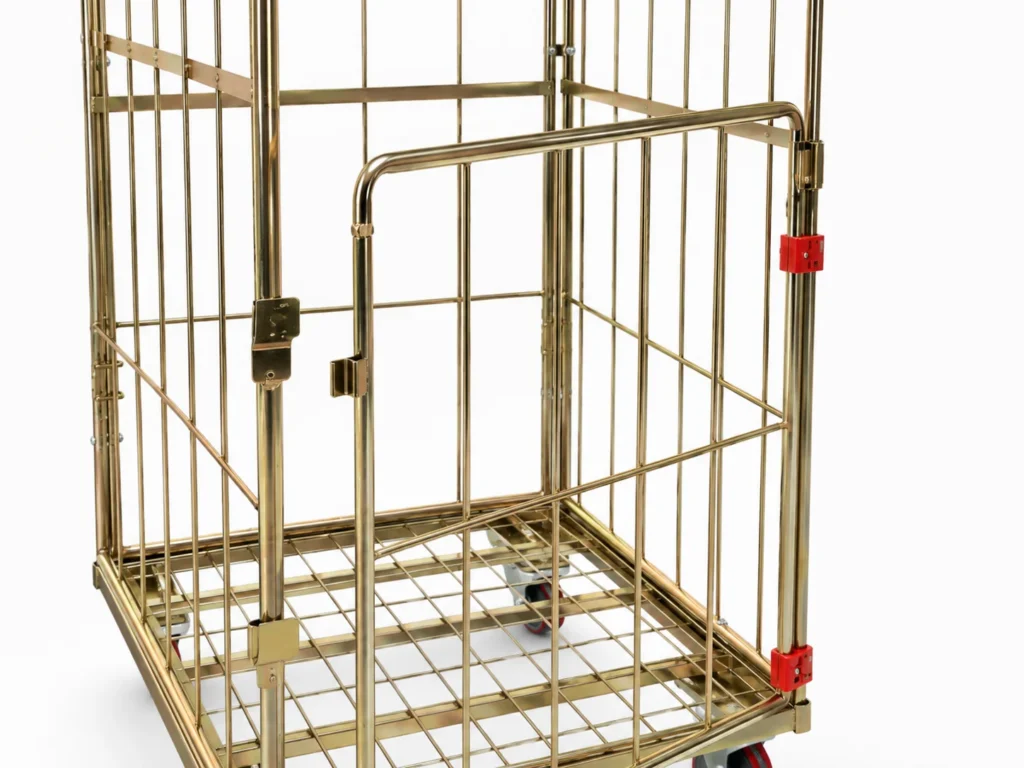
Split Gate Front Door
The front section features a split gate design, allowing partial opening for more convenient loading and unloading. This structure helps operators access contents more easily while keeping the rest of the enclosure in place during routine handling.
Wire Mesh Side Panels
The side and rear panels are made with welded wire mesh, creating a secure enclosure for linen, garments and laundry items. The mesh construction also keeps contents visible, making identification and sorting more efficient during daily operations.
Grid Base with Swivel Castors
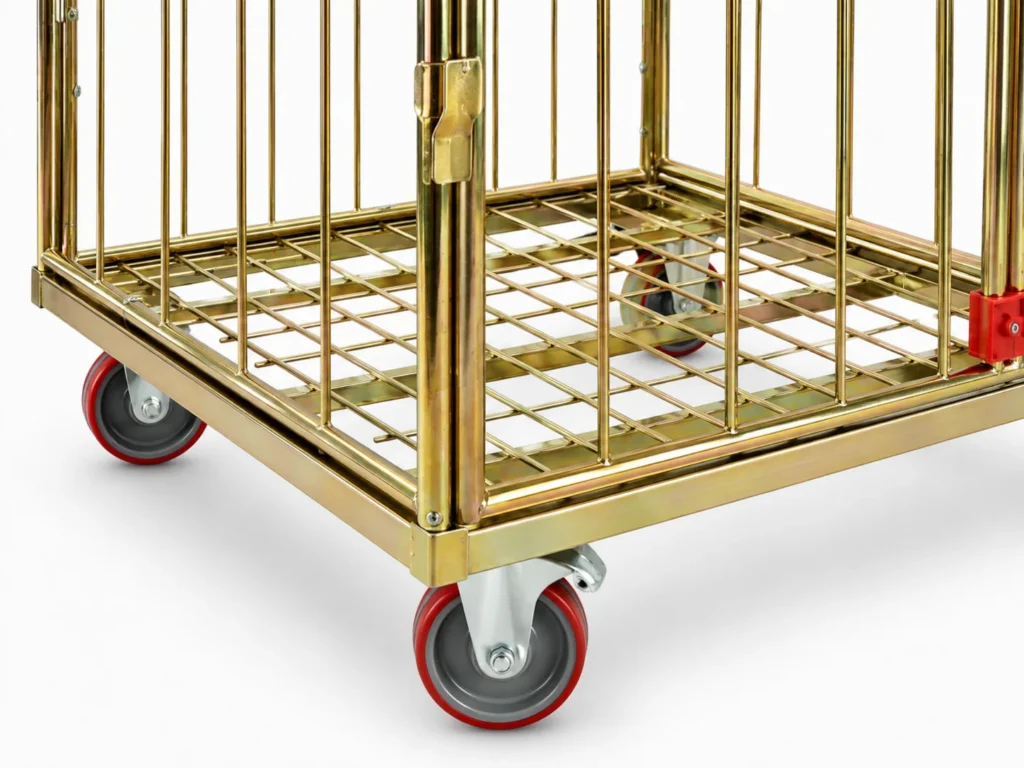
The lower section combines a strong grid base with swivel castors for stable support and smooth mobility. The base structure helps carry the load evenly, while the castor configuration allows the roll cage to move flexibly through laundry rooms, corridors and transport areas.
TITAN – Your Reliable Laundry Containers Manufacturer in China
TITAN is a professional laundry roll cage manufacturer in China, providing durable transport solutions for commercial laundries, hotels, hospitals, linen service companies and industrial facilities. Our Laundry Roll Cage Split Gate combines a robust steel wire structure, convenient split gate access and smooth-rolling castors to support efficient collection, movement and distribution of linen, uniforms, towels and other laundry items. The enclosed cage design helps keep loads organized and secure throughout daily laundry handling.
As a reliable supplier of laundry containers and linen transport cages, TITAN supports customized solutions for different operating environments. Size, surface treatment, caster configuration and structural details can be adapted to specific handling requirements. By combining practical design, stable manufacturing quality and flexible OEM support, TITAN helps customers improve laundry logistics efficiency, simplify loading and unloading, and build a more reliable linen transport system.
Applications
Commercial Laundries
Efficiently collect, sort and transport linen, towels and garments between washing, finishing and dispatch areas.
Hotels & Hospitality
Ideal for moving bed linen, towels and uniforms between guest rooms, housekeeping areas and laundry facilities.
Hospitals & Healthcare
Supports organized transport of hospital linen, uniforms and textiles between wards, laundry rooms and service areas.
Linen Rental Services
Suitable for high-frequency collection and distribution of rental linen, workwear and uniforms across multiple customer sites.
Related Products
Laundry Roll Cage Split Gate: The Complete FAQ Guide
What is a Laundry Roll Cage Split Gate?
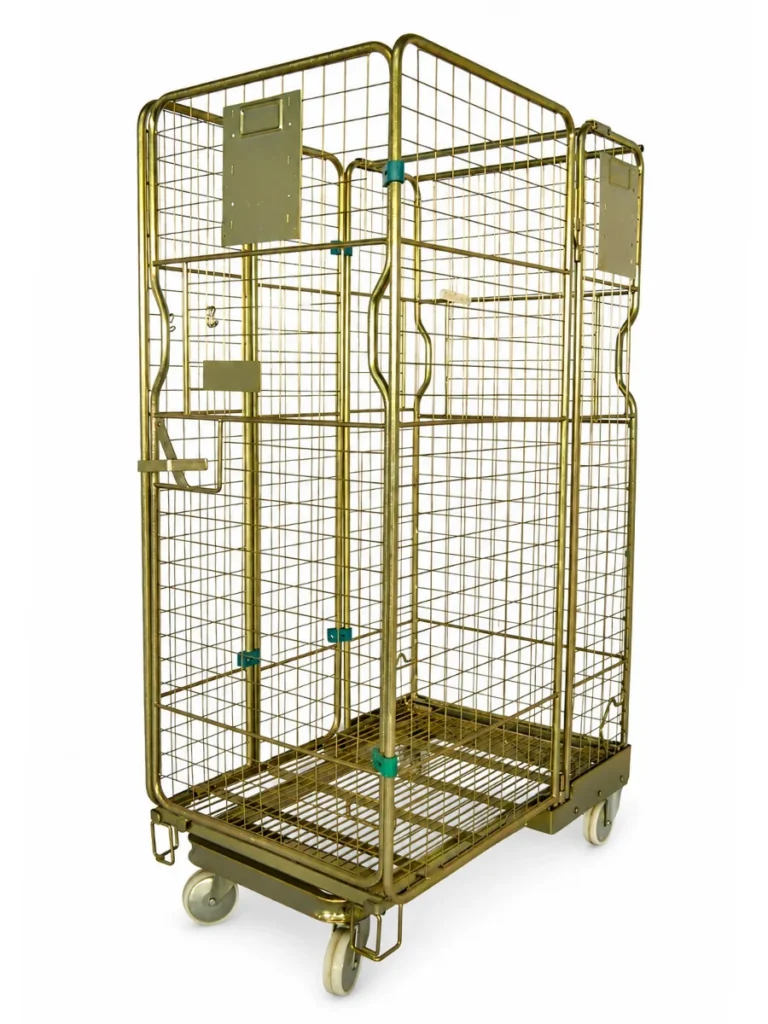
The Laundry Roll Cage Split Gate is a four-sided roll cage specifically designed for the transport of linens, bed sheets, towels, uniforms, and other textiles. Its core feature is a split-gate design at the front, which both secures the cargo and facilitates batch loading and unloading, making it ideal for high-frequency laundry logistics operations.
In which industries is the Laundry Roll Cage Split Gate primarily used?
It is primarily used in commercial laundries, hotels, hospitals, senior care facilities, linen rental companies, uniform cleaning service providers, industrial laundry centers, and other locations requiring the centralized transport of textiles.
What is the purpose of the Split Gate design?
The Split Gate design allows operators to open only a portion of the front door, rather than having to open the entire roll cage at once. This makes it easier to load and unload when the roll cage is full of linens and reduces the risk of cargo suddenly slipping or spilling.
What is the difference between the Laundry Roll Cage Split Gate and a standard Laundry Roll Cage?
The main difference lies in the front door structure. Standard roll cages typically feature a single, full-opening door, whereas the Split Gate divides the front opening into separate sections, allowing for the separate loading and unloading of linens stored at both high and low levels—making it better suited for commercial laundry environments with frequent loading and unloading.
What types of items is this roll cage suitable for transporting?
It can be used to transport lightweight or medium-weight textiles such as sheets, duvet covers, pillowcases, hand towels, bath towels, hotel linens, hospital linens, work clothes, uniforms, cleaning cloths, and bagged dirty laundry.
Can the Laundry Roll Cage Split Gate transport both clean and dirty linens at the same time?
Yes, but in practice, it is recommended to separate them using different carts, designated areas, or clear labeling to minimize the risk of cross-contamination between clean and soiled linens.
Why is a four-sided rail structure more suitable for laundry transport?
The four-sided enclosure prevents linens from sliding out during transport while maintaining high visibility. For loose, soft, and easily piled textiles, this design is better suited for long-distance transport than standard flat-bottomed carts.
What materials are used in the Laundry Roll Cage Split Gate?
The main body is typically constructed from steel tubing and wire mesh. Specific tube diameters, wire diameters, steel grades, and reinforcement structures can be customized based on the operating environment, load requirements, and customer specifications.
Can the dimensions of this Laundry Roll Cage be customized?
Yes. The length, width, height, and gate dimensions can all be adjusted based on laundry room aisles, elevator dimensions, truck space, linen bag specifications, and actual handling volume.
What is the load capacity of the Laundry Roll Cage Split Gate?
The load capacity depends on the product dimensions, frame structure, steel specifications, base structure, and caster configuration; therefore, it should be determined based on the final design. For projects with specific load requirements, the structure can be designed according to the customer’s actual operating conditions.
What surface treatments are typically used?
Common options include galvanizing, electrogalvanizing, and other corrosion-resistant surface treatments. The specific treatment should be determined based on the operating environment, humidity, corrosion protection requirements, and customer standards.
What are the advantages of a galvanized surface for use in laundry facilities?
Laundry environments typically have a certain level of humidity. Galvanization enhances the corrosion resistance of steel structures, facilitates daily cleaning, and helps extend the service life of the roll cage in high-frequency turnover environments.
What type of casters are used on the Laundry Roll Cage Split Gate?
Industrial-grade swivel casters are typically used, and can be configured with directional casters, swivel casters, or casters with brakes as needed. Wheel diameter, tread material, and load capacity can also be selected based on floor conditions and frequency of use.
Can the casters be customized for different floor surfaces?
Yes. Hotel hallways, hospital floors, industrial laundry rooms, and logistics warehouses have different requirements for noise, rolling resistance, wear resistance, and load capacity; therefore, casters with materials and designs suited to specific scenarios can be selected.
Does the Split Gate make it easy to remove linens from the bottom of a full laundry cart?
Yes. One of the main advantages of the split-gate design is that it improves access to areas at different heights. Operators can open the corresponding gate based on the location of the linens, reducing the need to repeatedly move items from upper levels.
Is the Laundry Roll Cage with Split Gate suitable for transporting hotel linens?
It is highly suitable. It can be used to transport sheets, hand towels, bath towels, and pillowcases between guest floors, linen rooms, laundry rooms, and service corridors, helping to improve the efficiency of linen turnover within the hotel.
Is this roll cage suitable for use in hospitals?
Yes, it is. Hospitals can use the Laundry Roll Cage Split Gate to transport sheets, uniforms, and other hospital textiles between patient wards, linen rooms, and laundry areas. In actual projects, it can be further configured according to the hospital’s hygiene management procedures.
Is the Laundry Roll Cage Split Gate suitable for high-frequency use in commercial laundries?
One of its design objectives is to meet the demands of frequent turnover. The steel frame, mesh fencing, casters, and split-gate structure are designed to withstand continuous loading, movement, unloading, and reuse.
Why does the bottom of the roll cage feature a wire mesh structure?
The wire mesh base provides stable support for linens while reducing the overall weight of the unit and minimizing areas where dust and water can accumulate. In laundry environments that require frequent cleaning, this open structure also makes maintenance easier.
Is the Laundry Roll Cage Split Gate easy to clean?
It is relatively easy. The open wire mesh structure minimizes enclosed corners, allowing for maintenance using standard cleaning methods suitable for metal surfaces. Specific cleaning agents should be compatible with the product’s actual surface finish materials.
Can nameplates or identification markers be added to the roll cage?
Yes. Metal nameplates, numbered areas, asset identification areas, or other marking structures can be added according to customer needs to facilitate categorized management for different departments, customers, hotels, or laundry processes.
Can internal dividers be added to the Laundry Roll Cage Split Gate?
Fixed or adjustable internal shelves, dividers, or other partitioning structures can be designed according to actual needs to separate different types of linens, uniforms, or laundry bags during transport.
Can the Laundry Roll Cage be customized to fit the dimensions of a transport vehicle?
Yes. For customers who need to load the roll cage directly into vans, delivery vehicles, or containerized transport systems, we can optimize the roll cage’s external dimensions based on the vehicle’s interior dimensions, loading capacity, and arrangement.
What information is needed when purchasing a Laundry Roll Cage with a Split Gate?
We recommend providing the expected dimensions, types of items to be transported, load capacity per unit, intended use, aisle width, casters requirements, surface finish requirements, gate structure, and estimated purchase quantity. The more complete the information, the easier it is to develop a suitable product solution.
Does TITAN offer customization for the Laundry Roll Cage Split Gate?
Yes. TITAN can adjust dimensions, frame structure, Split Gate design, wire mesh layout, surface treatment, caster configuration, and other structural details based on customers’ laundry logistics needs, providing customized Laundry Roll Cage solutions for commercial laundries, hotels, hospitals, linen rental services, and uniform services.