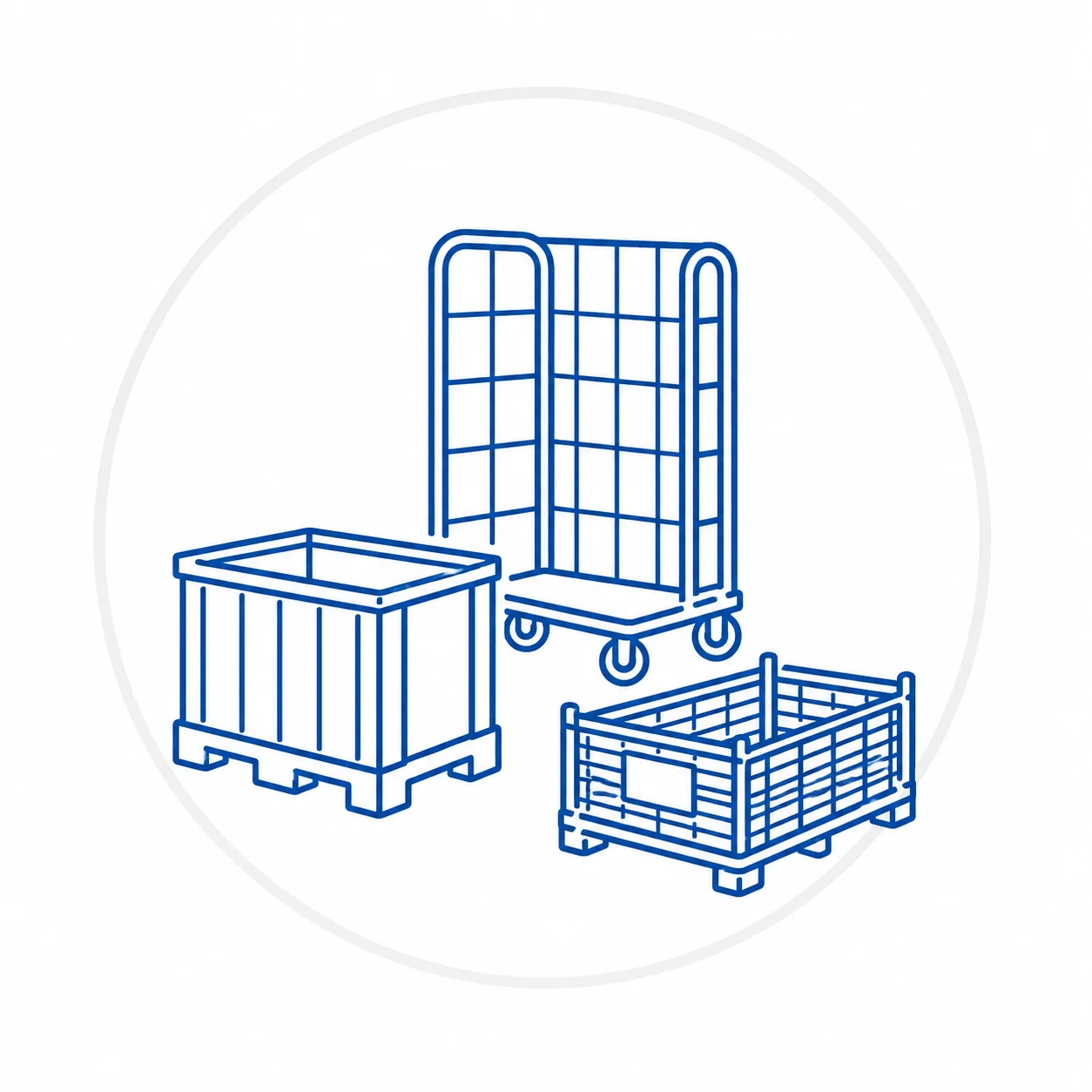
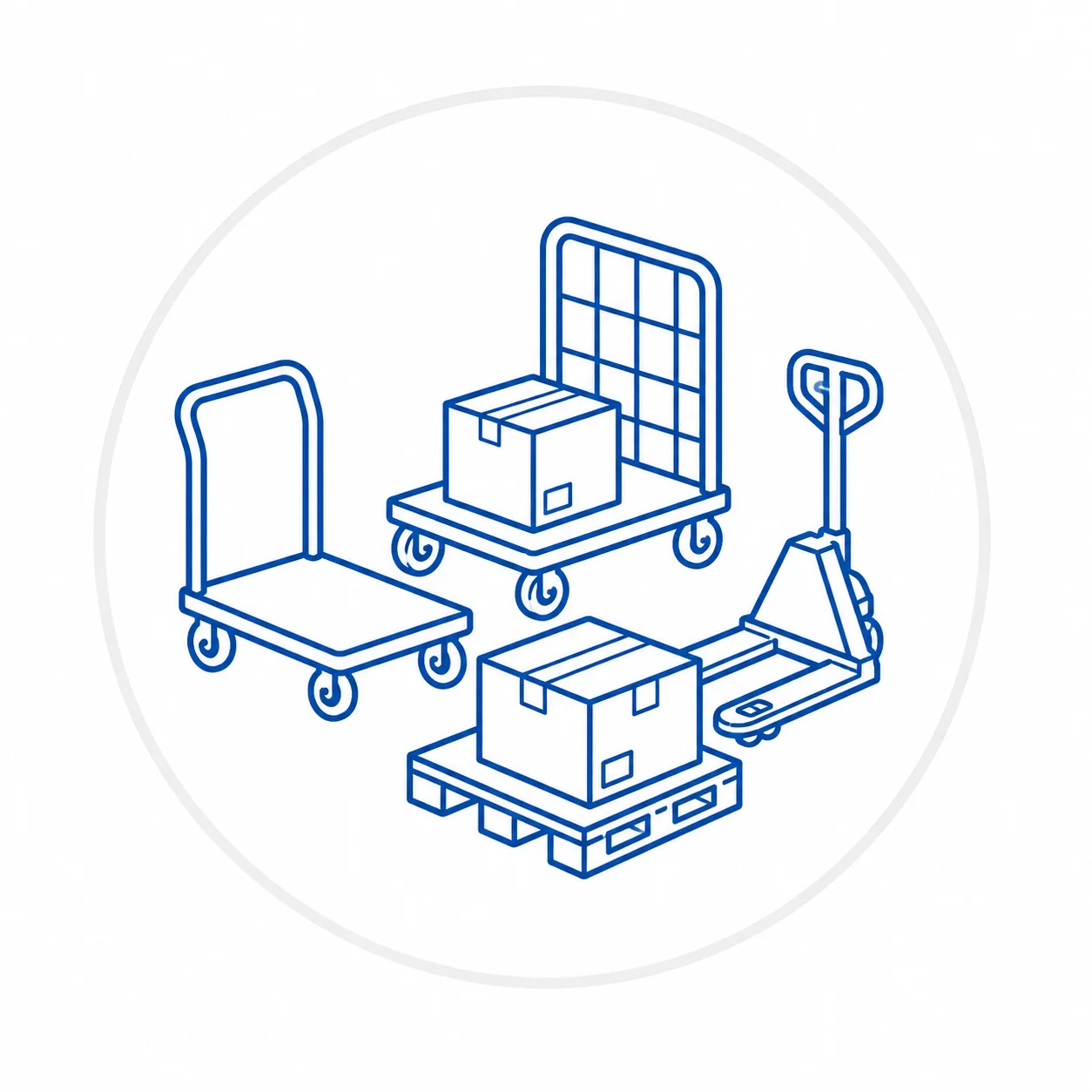
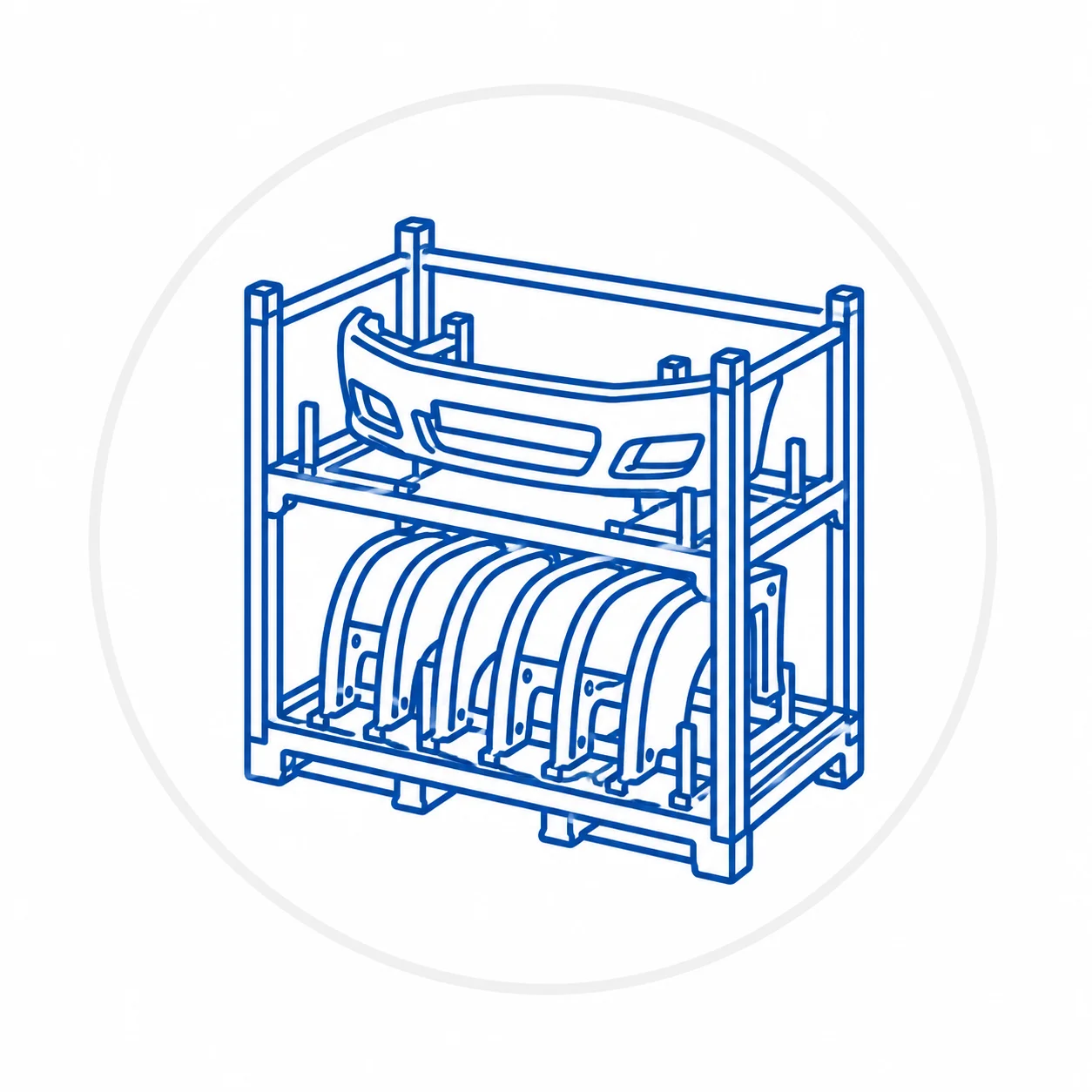
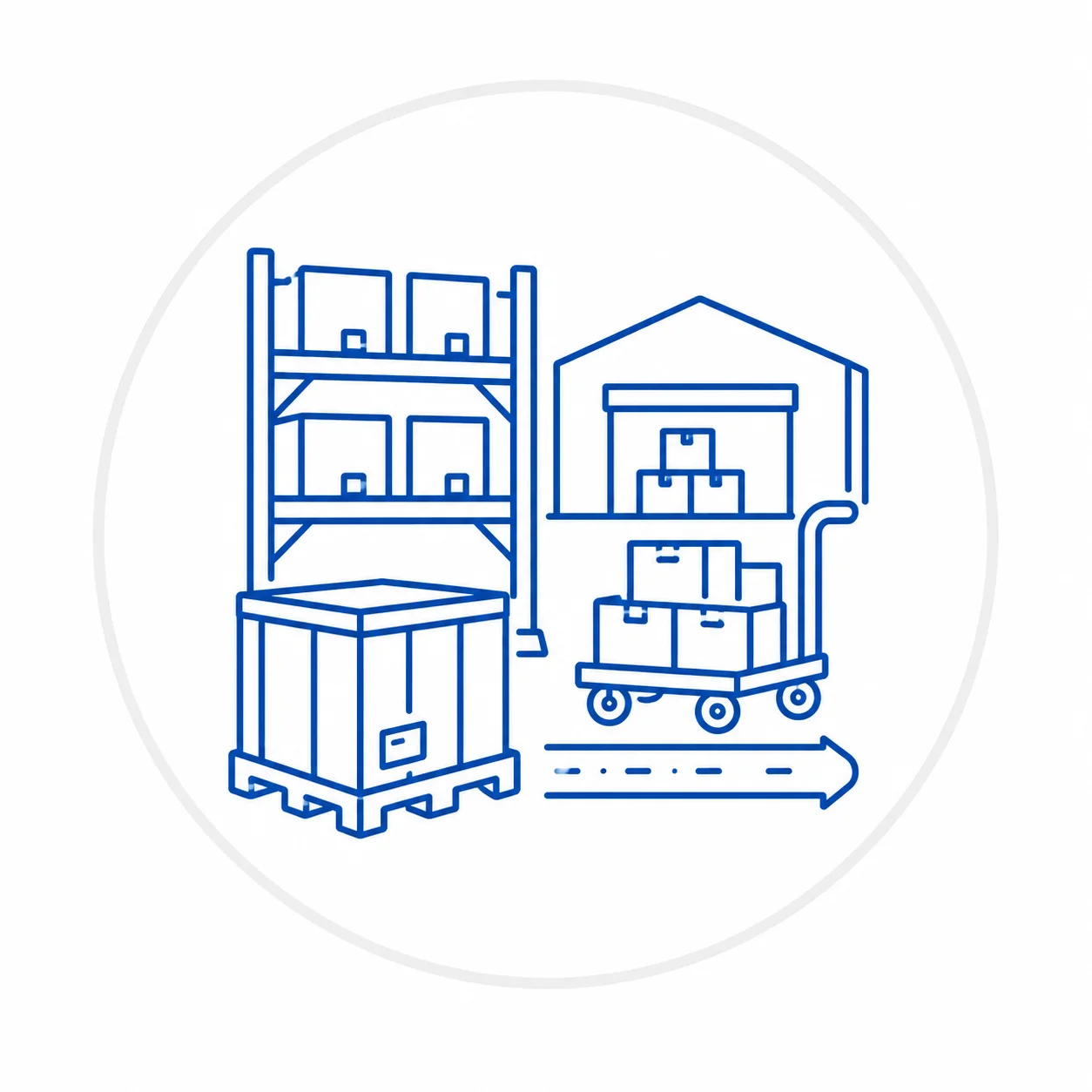
If you’re responsible for warehouse management, industrial production, or logistics equipment procurement, you’ve likely come across stillages. This equipment resembles metal pallets, storage cages, or steel frames, but its functions go far beyond simply storing goods.
This article will walk you through the definition of stillage, its main types, practical applications, and how to select the right industrial stillage based on your cargo and work environment.
What Is a Stillage?
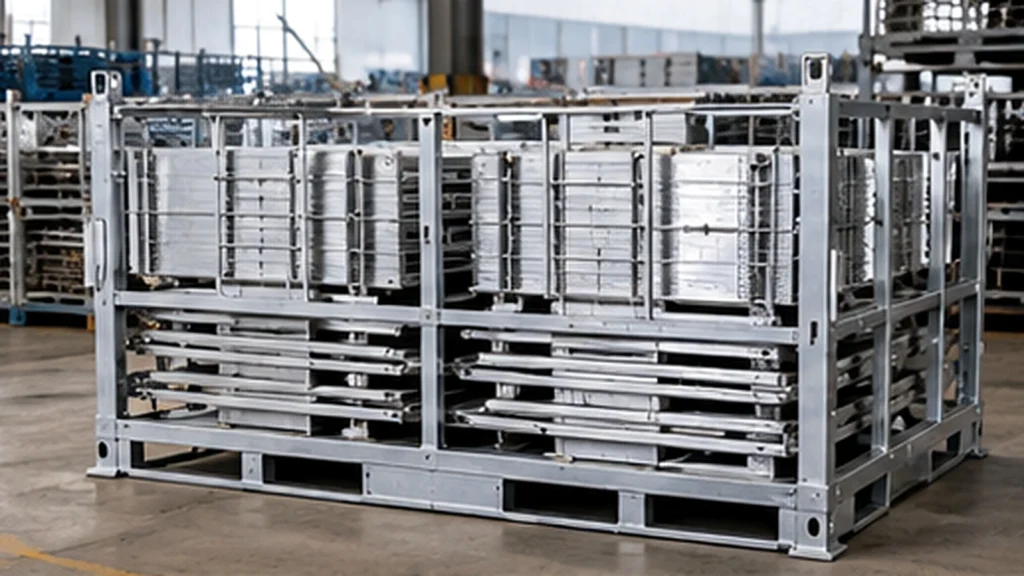
A stillage is a reusable load-bearing device used to support, store, handle, and transport goods, typically featuring a steel base, uprights, side frames, or a mesh structure.
In the Chinese industrial logistics sector, it may be referred to as a metal turnover rack, steel turnover rack, stacking rack, or industrial storage and transport rack, depending on its specific structure.
Compared to standard pallets, stillages typically feature additional support or containment structures that help keep cargo in place and reduce the risk of shifting during handling.
Common metal stillages consist of the following parts:
- Base support structure: Supports the weight of the cargo and is compatible with forklifts or other material-handling equipment.
- Uprights or side frames: Provide structural support and act as restraints for the cargo.
- Crossbeams or mesh panels: Further secure the cargo and reduce the risk of parts sliding out from the sides.
- Stacking positioning structures: Enable multi-level stacking when properly designed and validated.
- Accessory components: Partitions, padding, identification tags, hinged side doors, or folding mechanisms may be added as needed.
Not all stillages feature all of the above components.
For example, steel stillages used to store automotive parts may require internal positioning brackets, while models used for warehouse storage of cardboard boxes may prioritize versatility and ease of loading and unloading.
Therefore, when selecting a stillage, your first consideration should not be its appearance, but whether it is suitable for your goods and handling processes.
How does a stillage work?
The basic principle of a stillage is to consolidate multiple items of cargo into a single load-bearing unit, with the bottom structure supporting the weight and the frame or other retaining devices keeping the cargo stable.
In practice, you’ll typically go through three stages.
Loading the Goods
You can place metal parts, packaged products, or other industrial materials into the stillage.
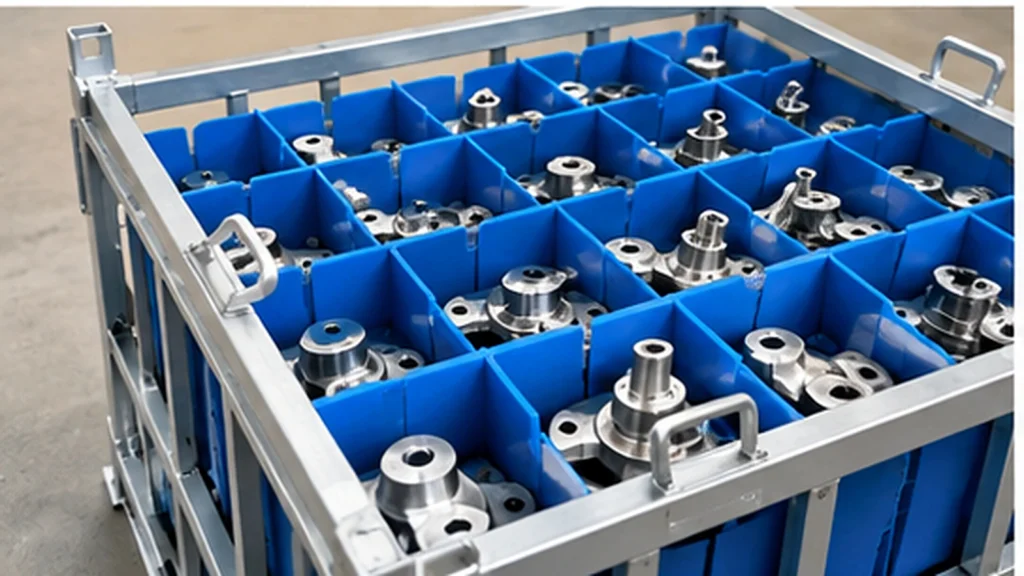
For products prone to scratches, impacts, or slipping, you can also use dividers, soft padding, or specialized positioning structures as needed.
This way, the goods do not have to rely entirely on external wrap-around packaging to stay in place.
Cargo Handling
When the base of the stillage is equipped with appropriate forklift entry spaces, you can use a compatible forklift to move the entire unit.
This means you do not have to move items one by one every time you move the cargo.
However, please note that the ability to use a manual pallet jack depends on the clearance at the bottom, the support structure, and the dimensions of the equipment; it cannot be determined solely by the stillage’s appearance.
Storage and Handling
If a specially designed stackable structure is used, you can stack multiple load units vertically under specified conditions.
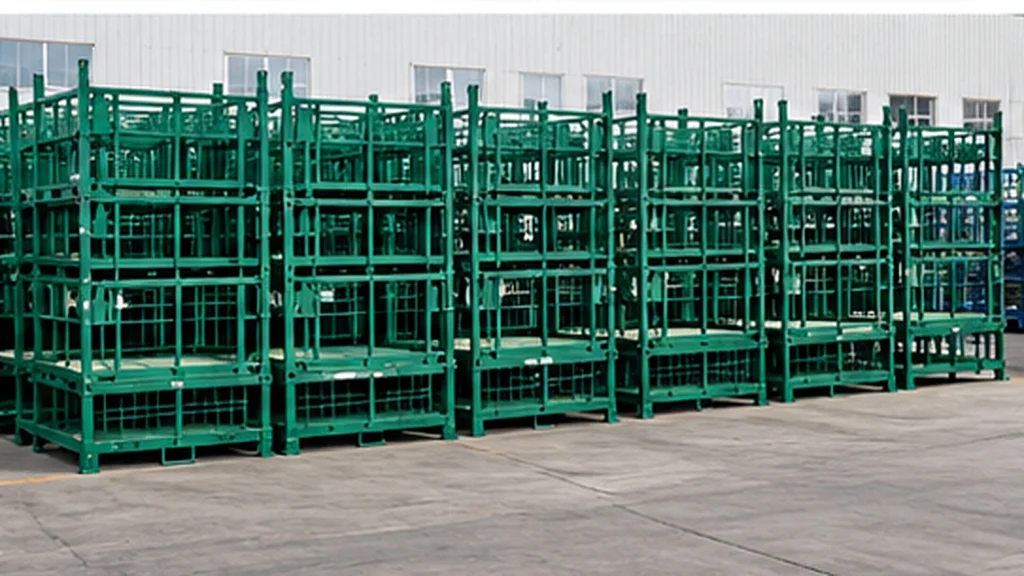
For logistics systems that require frequent return trips, foldable models also allow the side frames to be folded away after unloading, reducing the space occupied by empty equipment.
From this perspective, a stillage is not just a storage device, but also a logistics carrier that connects production, warehousing, and transportation.
What is the difference between a stillage and a standard pallet?
If you’re already using wooden or plastic pallets, you might ask: Why do you need a stillage?
Both can carry cargo, but their structural designs and applicable scenarios are not entirely the same.
| Comparison Points | Stillage | Standard Pallet |
| Basic Structure | Base with a frame, uprights, or support mechanisms | Primarily a flat load-bearing base |
| Cargo Securing | Can be secured using side frames, partitions, or positioning structures | Typically relies on packaging, strapping, or stretch wrap |
| Cargo Adaptability | Suitable for materials requiring additional support or sorting | Suitable for uniformly packaged and palletized cargo |
| Stacking Methods | Some models support direct stacking | Depends on the stacking capacity of the cargo and packaging |
| Product Customization | Internal structures can be designed to accommodate the shape of the parts | Primarily involves adjustments to dimensions, materials, and load-bearing design |
| Common Applications | Industrial parts, production handling, specialized logistics | Cardboard boxes, bagged materials, general warehousing |
Stillages are not superior to standard pallets in all situations.
If you primarily transport standard cartons, the packaging itself is sufficiently stable, and your existing pallet system is functioning well, then standard pallets may be more cost-effective.
However, if your goods are irregularly shaped, require repeated handling, or frequently result in disorganized stacking or parts colliding, a metal stillage with a support structure may be more suitable.
The key to choosing the right option is how much support and protection the goods require, as well as how they will enter your logistics system.
What are the common types of stillages?
Stillages on the market can be classified by structure, material, load-bearing capacity, and usage. The following types are relatively common in industrial logistics.
Steel Stillages
Steel stillages are typically manufactured from materials such as steel tubing, structural steel, or steel plates, making them suitable for industrial applications requiring high structural strength and repeated use.
You can use them to store mechanical parts, metal materials, semi-finished products, and other industrial goods.
The advantage of steel structures lies in their design flexibility, allowing the base, side frames, and support components to be adjusted to accommodate different loads and handling requirements.
However, the load-bearing capacity of steel stillages is not determined solely by the fact that they are made of steel; it also depends on material specifications, structural design, weld quality, and actual load conditions.
If your goods are heavy, you should verify the rated load capacity of the specific model when purchasing, rather than judging strength based solely on appearance.
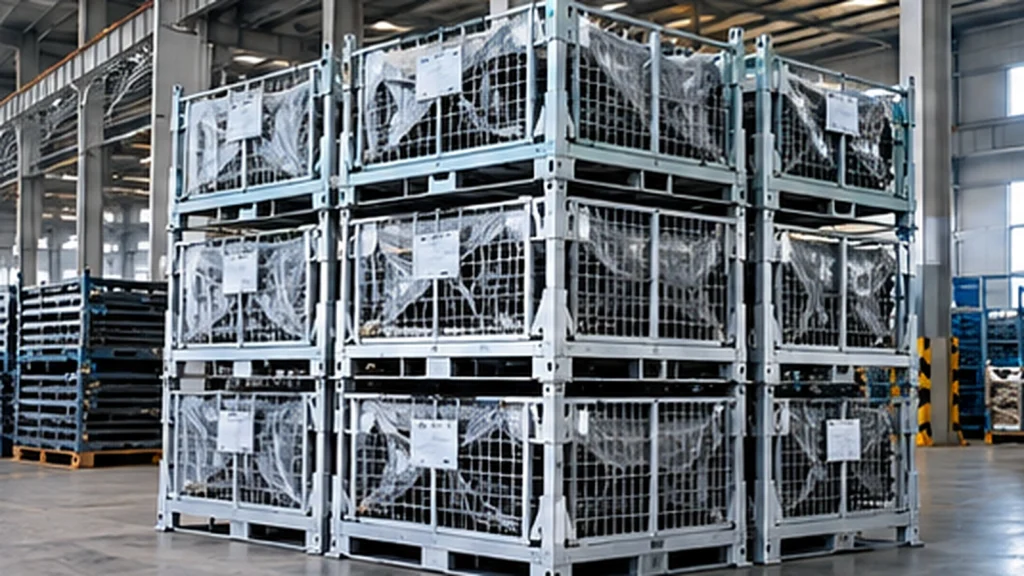
Stackable Stillages
When warehouse floor space is limited, a stackable design is usually the preferred option.
These stillages use uprights, stacking feet, positioning slots, or other load-bearing structures to transfer the weight of the upper layer along a designed load-bearing path.
Compared to single-tier placement, proper vertical storage can improve the utilization efficiency of limited space.
For example, suppose you need to centrally store multiple batches of auto parts. If each batch has its own stillage and the model allows for safe stacking, you can reduce the floor space occupied by the materials over the long term.
However, not all steel pallet racks are stackable.
Stackable does not mean the number of layers can be increased indefinitely. The actual stacking height must be determined based on the manufacturer’s specified load capacity, center of gravity, structural compatibility, floor conditions, and on-site safety requirements.
Foldable Stillages
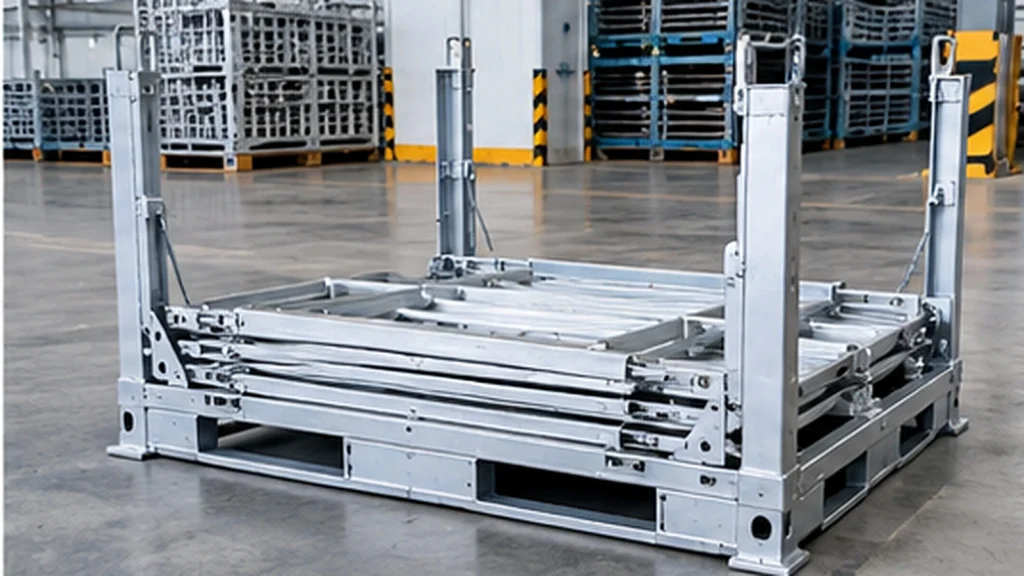
If your logistics process involves a large number of empty return trips, foldable stillages may be more practical than fixed structures.
They typically feature foldable side frames or retractable support components. After the shipment is complete, staff can fold them according to the operating instructions.
This reduces the space occupied by empty stillages in warehouses or return vehicles.
The foldable design is particularly suitable for:
- Circular logistics between factories and suppliers
- Distribution systems requiring the return of empty stillages
- Seasonal inventory turnover
- Businesses with frequently changing warehouse space
However, when making your selection, you should also inspect the folding joints, locking mechanisms, and stability when fully extended.
Frequent folding means these components will undergo repeated use. Good structural design and regular maintenance are crucial for long-term use.
If you’re looking for this type of equipment, check out TITAN’s Foldable Stillage products to learn about the specific designs of the steel frames, forklift-accessible bases, and foldable structures.
Mesh Stillages
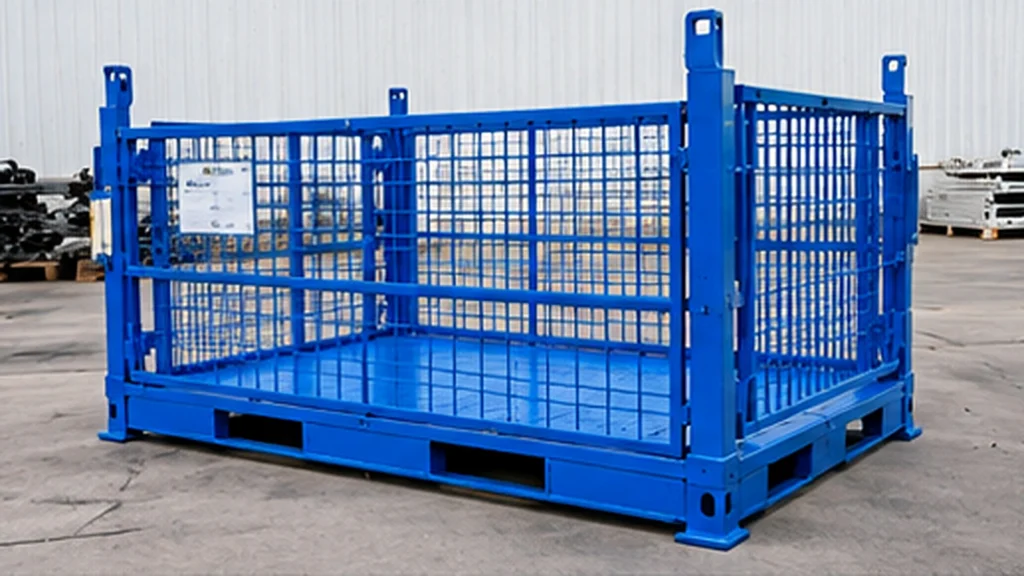
Mesh stillages use metal mesh for all or part of their side walls.
Compared to fully enclosed steel-panel stillages, the mesh allows for easier viewing of the contents and facilitates inventory management.
They are frequently used for warehouse sorting, parts handling, and storing packaged products.
If you want employees to be able to see the materials inside the stillage directly without having to open the container every time, the mesh design is more convenient.
However, you’ll need to pay special attention to the mesh aperture size.
If the storage contains small nuts, fasteners, or other loose parts, mesh openings that are too large may cause the items to fall out. In such cases, a base plate, lining, or other protective structure can be added.
Heavy-Duty Stillages
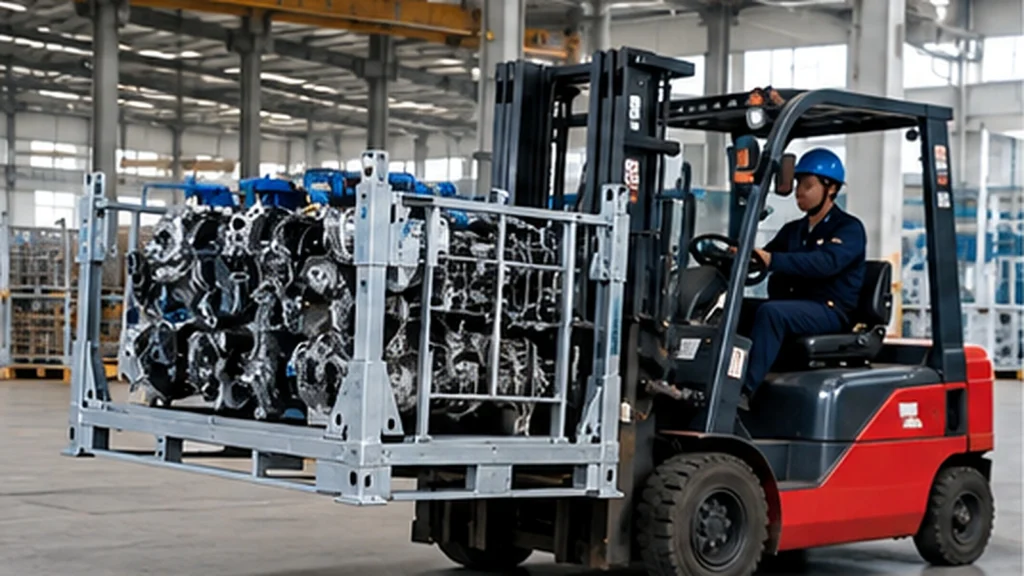
Heavy-Duty Stillages are primarily designed for heavier loads or more demanding industrial applications, such as heavy machinery parts, castings, forgings, and large metal components.
These products typically require specialized design considerations for load-bearing areas, base supports, welded joints, and the cargo’s center of gravity.
For heavy cargo, you need to consider two issues in particular:
First, can the equipment support the actual weight of the cargo and its distribution?
Second, will the cargo remain stable while the forklift is moving, turning, and braking?
Even if a stillage can withstand the weight of the load while stationary, this does not mean it is suitable for all handling methods.
Therefore, when purchasing heavy-duty stillages, you should ask the supplier to clearly specify the design conditions, rated load capacity, and relevant validation requirements.
Custom Stillages
Standard products may not be suitable for every type of industrial part.
For example, if you need to transport metal parts with precision-finished surfaces, a standard steel frame may provide sufficient load-bearing capacity but cannot effectively prevent the parts from coming into contact with one another.
In such cases, you may want to consider custom stillages.
Depending on the part’s shape and packaging requirements, a custom design may include:
- Specialized support points and positioning structures
- Removable dividers
- Scratch-resistant liners
- Securing devices and side panels that open
- Special-sized forklift access points
- Product Identification and Asset Tracking Labels
The value of customization goes beyond simply changing external dimensions; it ensures a more seamless process for loading, handling, storing, and unloading goods.
What are the main advantages of a stillage?
For businesses that frequently handle industrial materials, metal stillages can provide practical value in the following areas.
Better organization of warehouse space
When different parts have designated storage locations, you can reduce misplacement and temporary piling.
For models that support safe stacking, you can further utilize vertical warehouse space.
This is particularly helpful for factories with limited floor space that need to manage a wide variety of parts.
Reduced Risk of Cargo Damage
If goods are placed directly on standard pallets without proper securing mechanisms, they may shift or collide with one another during handling.
Returnable racks equipped with side frames, positioning devices, or protective padding can help minimize these issues.
Of course, the ultimate level of protection still depends on the nature of the goods, the packaging method, and the loading operations.
Facilitates repeated handling
By using the right industrial returnable racks, you can handle multiple parts as a single load unit.
For goods that need to be moved frequently between production lines, temporary storage areas, and finished goods warehouses, this reduces the need for repeated reorganization and the handling of individual items.
Supports Circular Logistics
If you need to repeatedly transport parts between suppliers, manufacturing plants, and distribution centers, reusable stillages can be part of a circular packaging system.
Compared to single-use packaging, this offers the potential to reduce repeat purchases and packaging waste—provided the equipment has a sufficient service life and arrangements for collection, repair, and return transportation are well-organized.
Adaptability to Different Cargo
By adjusting the base, frame, internal supports, and surface finish, you can adapt the same type of equipment to different applications.
This flexibility is particularly valuable for manufacturing companies with a wide variety of products and frequent changes in materials.
In which industries are stillages primarily used?
Stillages have a wide range of applications, but procurement priorities vary across different industries.
Automotive Manufacturing and Automotive Parts (Automotive Industry)
Automotive production involves a large number of stamped metal parts, castings, machined parts, and other components.
If you’re responsible for automotive parts logistics, you may need to continuously move materials between suppliers, factory warehouses, and assembly lines.
Stillages designed specifically for the shape of the parts can provide layered, positioned, or isolated structures, making it easier to manage different batches and reduce unnecessary contact.
For parts with high surface finish requirements, internal protection is often more important than simply increasing the frame’s strength.
Industrial Manufacturing
In machining, sheet metal fabrication, and equipment manufacturing, production materials often go through multiple processes.
For example, a batch of parts may first enter the machining area before being transferred to inspection, assembly, and packaging.
Using a standardized stillage makes it easier to coordinate the flow of parts between processes.
For semi-finished products with complex shapes or that are easily mixed up, specialized positioning structures also help keep materials organized.
Warehousing & Distribution
If your warehouse handles a large volume of goods with varying specifications on a daily basis, stillages can be used to centrally store, temporarily hold, and distribute materials.
Mesh-style stillages are suitable for applications requiring visibility into inventory; stackable stillages are ideal for scenarios where you want to maximize floor space utilization.
However, when using stillages on pallet racking, you must verify that the base’s support method is compatible with the racking system; not all models can be placed directly on the racking beams by default.
Construction & Metal Products
Some construction materials, metal profiles, or structural components are characterized by their great length and irregular shapes.
Such goods may require open frames, special support points, or additional fasteners.
If you are storing or transporting glass, sheet materials, or products susceptible to damage from stress, you should design independent support and protection methods based on the material properties, rather than simply using standard parts from standard pallet racks.
Retail Supply Chain and Logistics (Retail & Logistics)
In supply chains that require round-trip delivery, collapsible returnable racks make it easier to recover empty equipment.
For businesses with fixed delivery routes and stable return processes, this approach is worth comparing to the costs of single-use packaging.
However, if the types of goods change rapidly or the stillages are difficult to recover, you should also evaluate the additional costs associated with equipment management and return transportation.
How to Choose the Right Stillage for You?
If you’re planning to purchase metal returnable racks, the following factors will directly determine whether the equipment is truly suitable.
Determine the Size Based on the Cargo
Don’t just consider whether the products will fit inside.
You should also confirm the loading method, the available internal space, the gaps between goods, and whether it is easy for staff to load and unload them.
For example, for mechanical parts that require individual positioning, two stillages with the same external dimensions may have completely different amounts of actual usable internal space.
We recommend that you provide the length, width, and height of the goods, as well as the weight per piece and the number of items per rack, and specify whether dividers or other protective structures are needed.
Specify the rated load capacity
When purchasing, you need to distinguish between the pallet’s own weight, the cargo’s payload, and the load capacity allowed under specific operating conditions.
If stacking is planned, you must also consider how the load from the upper layer is transferred to the lower rack.
You can ask the manufacturer to confirm the following information:
- Permissible cargo load per rack
- Whether the cargo is evenly distributed
- Permitted stacking methods and number of layers
- Forklift handling conditions
- Load limits for specific operations
Especially for heavy loads or those with a high center of gravity, the load capacity should not be interpreted simply as an isolated weight figure.
Verify the compatibility of handling equipment
Are you currently using a forklift, a manual pallet jack, or other handling equipment?
Different equipment has varying requirements for clearance, fork position, and load handling methods.
If the roll-rack needs to pass through warehouse aisles of a fixed width or through specific loading and unloading equipment, these dimensions should also be provided before design.
For automated warehousing systems, it is even more important to verify the bottom structure, conveying method, and the system’s permitted dimensions and weights in advance.
Selecting the Appropriate Surface Finish
Common surface treatments for steel stillages include powder coating and galvanizing.
Powder coating provides a surface coating with a certain level of protection, while also allowing for color selection based on corporate branding or classification needs.
Galvanizing provides corrosion protection through a zinc layer and is suitable for applications requiring corrosion resistance.
However, the specific protective effectiveness is influenced by the manufacturing process, coating quality, operating environment, and maintenance conditions.
If the equipment is frequently exposed to damp, outdoor, or corrosive environments, you should specify the usage conditions to the supplier rather than selecting a treatment process based solely on surface color.
Evaluating Fixed vs. Folding Structures
If your roll-rack is loaded with goods most of the time, a fixed structure may be simpler and more convenient for day-to-day management.
If empty racks need to be returned frequently, a foldable model may offer greater value.
However, you should consider the folded size, setup time, structural maintenance, and procurement costs together, rather than focusing solely on how much space can be saved.
Consider Long-Term Costs
The unit purchase price of a stillage is only a portion of the total cost.
You also need to consider costs such as daily maintenance, replacement due to damage, storage space, transportation, cleaning, and the return of empty stillages.
If a set of equipment can be used for multiple turnover cycles, the cost per use may be a more meaningful metric than the purchase price.
However, long-term cost advantages must be based on actual usage frequency and equipment lifespan; one cannot simply assume that metal returnable racks are always cheaper than standard pallets.
How to Choose a Turnaround Rack for Auto Parts?
Suppose you need to select new logistics handling equipment for a batch of machined parts.
The parts will circulate repeatedly between the supplier’s warehouse, transport vehicles, and the assembly plant, and some surfaces must not sustain visible dents or scratches.
In this case, you can make your decision using the following steps.
First, record the parts’ dimensions, weight, and quantity per shipment to determine how many items the rack needs to hold.
Second, confirm whether the parts can come into direct contact with one another. If not, you’ll need to consider individual positioning, dividers, or protective padding.
Next, check the fork dimensions of your existing forklifts, warehouse aisles, and loading/unloading methods to avoid handling difficulties once the equipment is put into use.
Finally, choose between a fixed or collapsible structure based on whether empty racks need to be returned.
If you provide only the external length, width, and height dimensions, manufacturers are typically unable to determine whether the internal protective structure is appropriate.
Therefore, providing a part drawing, the expected load quantity, and the actual logistics process is often more helpful in obtaining an accurate solution than simply asking, “How much does one cost?”
What information should you provide to the manufacturer when customizing a stillage?
If you need to purchase industrial stillages in bulk or have them custom-made, preparing a complete set of requirements will reduce the need for repeated revisions during communication.
We recommend clarifying the following in advance:
| Purchasing Information | Information You Need to Provide |
| Cargo Information | Product type, dimensions, weight, drawings, or photos |
| Loading Requirements | Quantity per pallet, total load, and arrangement |
| Pallet Dimensions | External size restrictions, internal space requirements |
| Operating Environment | Indoor or outdoor, temperature and humidity, corrosive conditions |
| Handling methods | Forklifts, pallet jacks, or other equipment |
| Structural Requirements | Fixed, foldable, stackable, partitioned, protective measures |
| Surface treatment | Powder coating, galvanizing, or other specific requirements |
| Procurement Plan | Estimated Quantity, Frequency of Use, Delivery Location |
If you do not yet have complete design drawings for the pallet, you can first provide the dimensions of the goods, photos, and usage scenarios so that the supplier can evaluate feasible structural solutions.
However, key parameters related to load capacity and safety must still be clarified during the design and procurement confirmation process.
Why Consider Purchasing from a Professional Stillage Manufacturer?
For corporate procurement, finding the right stillage manufacturer involves more than just comparing the equipment’s appearance and unit price.
You also need to understand whether the supplier can design structures tailored to the actual cargo, produce according to drawings, and ensure consistency across batch production.
This is especially true for custom stillages: even if dimensions appear similar, this does not mean they are directly interchangeable.
The location of the bottom forklift slots, support points, stacking alignment, and the method of securing internal components can all affect whether the equipment can be put into normal use.
TITAN’s Custom Industrial Stillage Solutions
TITAN Logistic Equipment provides industrial stillages, logistics containers, roll cages, and other material handling equipment for applications in warehousing, logistics, automotive parts, and industrial manufacturing.
Based on your specific project requirements, you can discuss the following aspects with TITAN:
- Dimensions and structural design of steel stillages
- Foldable and stackable options
- Forklift handling bases and interfaces
- Cargo positioning and protection structures
- Surface treatment options, such as powder coating and galvanizing
- Sample Validation and Mass Production Requirements
TITAN’s Stillages product line can help you gain an initial understanding of the applications for different structures.
If you already have specific cargo dimensions, drawings, and estimated purchase quantities, you can also discuss your technical requirements further through TITAN’s customization service.
Rather than simply selecting a generic model that appears suitable, you should first confirm whether it aligns with your loading, transportation, and warehousing processes.
What other costs should you compare when purchasing stillages?
If you are comparing quotes from multiple suppliers, we do not recommend focusing solely on the price of each stillage.
For industrial equipment intended for repeated use, you should evaluate it from a Total Cost of Ownership (TCO) perspective .
This primarily includes the following aspects.
Initial cost: Product manufacturing, prototype development, shipping, and other one-time expenses.
Operating costs: Expenses required for daily handling, cleaning, maintenance, and storage.
Turnaround costs: Costs associated with returning empty racks, equipment recovery, and inventory management.
Waste costs: Equipment repairs, replacements, and damage to goods caused by inadequate packaging or securing.
Service Life: The actual number of required cycles the equipment can complete.
For example, the initial price of a collapsible pallet rack may be higher than that of a simple fixed structure, but if empty racks are frequently returned, the reduced transportation space required may yield long-term value.
Conversely, without a reliable return mechanism, the advantages of a foldable structure may not be fully realized.
Therefore, the most valuable question to ask when purchasing is not “Which stillage is the cheapest?” but rather:
Which design can fulfill your logistics needs at a reasonable long-term cost while meeting cargo protection and safety requirements?
Conclusion
A stillage is a practical piece of industrial storage and material handling equipment that helps you manage different types of cargo through its specially designed frame, base, and protective structure.
If you need to improve warehouse space utilization, consider stackable structures; if there are a large number of empty return trips, evaluate foldable options; if cargo has complex shapes or easily damaged surfaces, custom returnable stillages are often worth exploring.
Ultimately, the effectiveness of your purchase is determined not by whether a particular design is popular, but by whether the equipment meets your actual load-bearing, loading, handling, and service life requirements.
Are you looking for Steel Stillages, Stackable Stillages, or Custom Stillages that suit your business?
TITAN can help you evaluate industrial stillage solutions based on your cargo dimensions, drawings, usage scenarios, and anticipated purchase quantities.
Contact TITAN to submit your stillage project requirements
Email:info@titanleq.com
Make your logistics equipment better suited to your actual work, rather than having to adapt your work to unsuitable equipment.
Frequently Asked Questions About Stillages
What does “stillage” mean in warehousing?
In the warehousing industry, a “stillage” typically refers to a reusable frame or load-bearing container used to support, store, and transport goods. It generally features a base and additional support structures to help you manage industrial materials efficiently. Depending on the design, a stillage may also be suitable for forklift handling, stacking, or folding for storage.
What are stillages used for?
Stillages are primarily used for industrial parts storage, material handling on production lines, temporary warehouse storage, freight transportation, and returnable packaging. If you need to repeatedly move the same batch of materials, using the right stillage can reduce the need for individual handling and repetitive reorganization. Specialized goods can also be handled using custom positioning structures.
What is the difference between a stillage and a pallet?
A pallet primarily provides a flat loading surface, while a stillage typically includes upright posts, a frame, or side rails. For standard cartons, a regular pallet may be sufficient; however, if your cargo requires additional support, sorting, or containment, a stillage may be more appropriate. The actual load-bearing capacity and safety performance of both depend on their specific design.
What is a Stillage Cage?
A stillage cage is a reusable frame with a mesh or other side containment structure that can restrict the movement of cargo to a certain extent. It is suitable for scenarios requiring the centralized storage of parts, packaged products, or bulk materials. When selecting a model, check the mesh size, side door structure, and base plate design to prevent small items from falling out or to ensure ease of loading and unloading.
How much weight can a steel stillage hold?
There is no universal weight capacity figure that applies to all steel stillages. The rated load depends on the steel specifications, base structure, welding design, cargo distribution, and operating conditions. If you need to store heavy industrial parts, you should provide the manufacturer with the maximum cargo weight and handling method, and confirm the allowable load for the specific model.
Can stillages be stacked?
Some stackable stillages can be stacked, but they must have support and positioning structures that have been appropriately designed and verified. The number of permitted stacking levels depends on the equipment design, load distribution, the cargo’s center of gravity, and on-site conditions. Do not stack standard stillages directly on top of one another, and do not equate the stacking capacity of an empty stillage with that of a fully loaded one.
Can stillages be used on pallet racking?
Certain stillages can be used with pallet racking, but not all models are suitable. You need to check the base support locations, racking beam spacing, rated load capacity, and whether additional support components are required. If the base structure cannot properly transfer the load to the racking, the stillage cannot be placed directly on it. It is recommended that the racking supplier and the stillage manufacturer jointly confirm compatibility.
What is the difference between foldable and fixed stillages?
Foldable stillages allow part of the structure to be folded away when empty, making them suitable for processes that require the return of empty stillages or the conservation of idle storage space. Fixed stillages have a relatively simple structure and do not need to be folded or unfolded each time. If you have frequent two-way logistics, you should prioritize evaluating foldable options; if the equipment is primarily used for internal warehouse circulation, you should compare the actual costs and maintenance requirements of both structures.
Can stillages be customized?
Yes. Custom stillages can be designed based on cargo dimensions, weight, handling equipment, and storage environments. Common customization options include base dimensions, upright height, internal dividers, forklift access points, surface finishes, and positioning mechanisms. If you have specific components, it is best to provide drawings or photos and describe the expected load capacity and usage process.
How do you choose a reliable stillage manufacturer?
You should focus on the manufacturer’s structural design capabilities, quality control of materials and welding, customization experience, and sample verification process. For industrial bulk purchases, you should also clarify product dimensional tolerances, rated load capacity, inspection requirements, and delivery terms. TITAN offers industrial stillages and custom logistics equipment services; you can submit drawings and procurement requirements to further evaluate suitable manufacturing solutions.